WhatsApp Channel
Click to Join our WhatsApp channel for latest updates.
Telegram Channel
Click to Follow Telegram Channel for real-time updates.
Instagram Channel
Click to Join our Instagram channel for latest updates
Click to Join our WhatsApp channel for latest updates.
Click to Follow Telegram Channel for real-time updates.
Click to Join our Instagram channel for latest updates
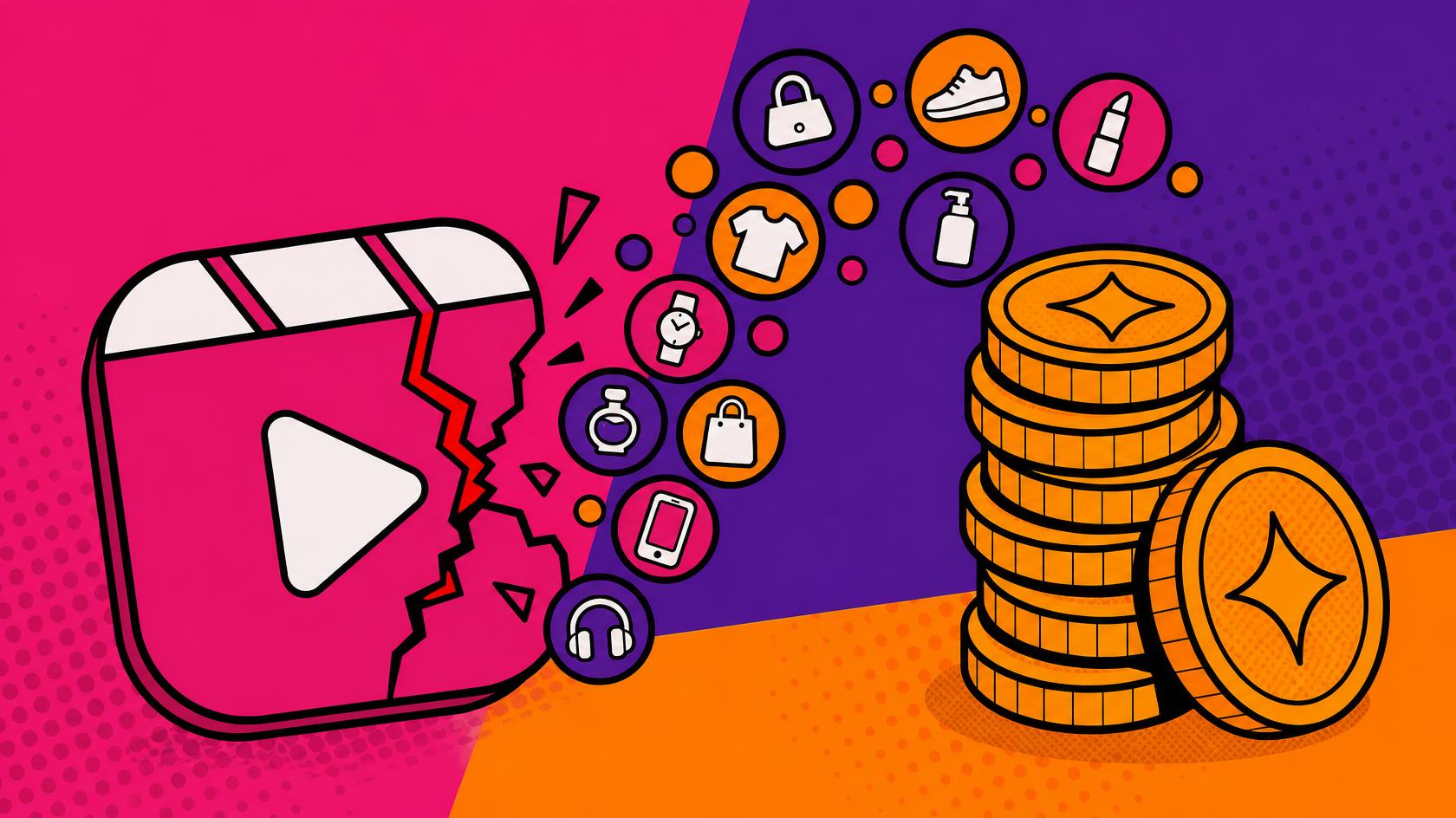
Quick answer: Instagram relaunched native affiliate commerce in late March 2026. Reels can now carry up to 30 tagged products, purchases redirect off-platform to the brand's own checkout, and commission rates, typically 10-20% for most direct-to-consumer categories, are set by each brand rather than by Instagram itself. India was one of the five markets it launched in alongside the United States, Brazil, Indonesia, and Thailand. Meta takes no cut of the sale, but the feature's conversion rate has so far trailed TikTok Shop's in-app checkout model, and a trust-damaging AI auto-tagging test in February 2026 is still shaping how cautiously some creators use it.
Instagram's relationship with affiliate commerce has a strange history. The platform's original in-app shopping and affiliate tools were largely wound down by 2022, ceding the entire creator-affiliate space to TikTok Shop, Amazon, and link-in-bio tool providers for more than three years. That changed in late March 2026, when Instagram head Adam Mosseri announced that creators could once again tag products directly inside Reels and earn a commission when a tagged product sells. At Shoptalk Spring 2026, Meta's Head of Global Business, Nicola Mendelsohn, put the strategic intent bluntly, telling the industry the era of link in bio is finally over. Whether that proves true depends on execution, but the underlying mechanics are real and already live in five markets.
The feature is straightforward once a brand's catalog is set up correctly. A creator can tag up to 30 products in a single Reel, either by pasting a direct product URL or by searching the brand's catalog inside Meta's Commerce Manager directly from the Reel composer. Tapping a tag does not complete a purchase inside Instagram itself, it redirects the viewer off-platform to the brand's own website, app, or an Amazon listing, where the sale actually closes. Commission is only credited once that purchase is confirmed on the brand's side, not the moment someone taps the tag. Creators who already run affiliate links through Impact, Rakuten, or Shopify Collabs, or who use link tools like LTK or ShopMy, can connect those existing accounts instead of starting from zero inside Instagram's own system. None of this matters, though, if the Reel itself doesn't get seen. Getting a tagged Reel in front of enough people is still a discovery problem before it's a commerce problem, and our guide to Instagram SEO in 2026 covers how Reels actually get surfaced in Search now, separate from the commerce mechanics here.
There is no single Instagram affiliate commission rate, and any guide that gives you one flat number is guessing. Rates are set brand by brand through Meta's Commerce Manager, and trade-press coverage of the relaunch puts most direct-to-consumer categories somewhere in a 10-20% range. That tracks with the wider affiliate industry's own category benchmarks: apparel and accessories typically run 8-15%, beauty and personal care 10-18%, health and wellness 8-15%, food and beverage 8-12%, home and lifestyle 8-12%, sport and outdoor gear 8-12%, and jewelry and pet products both around 10-15%, while electronics and gadgets usually sit lowest, around 5-10%, because margins in that category are thinner to begin with. None of these numbers are guaranteed on any specific Instagram partnership, they are the range worth negotiating from, not a rate card Instagram itself publishes. What is confirmed is that Meta currently takes zero commission on these affiliate sales, unlike some platform-currency systems where the platform itself takes a cut before a creator ever sees a payout.
The honest comparison against TikTok Shop is not flattering yet. TikTok Shop's most recently reported figures show roughly 33.2 billion dollars in global GMV, more than 100,000 active affiliate participants, a 5.2% link engagement rate, and a 4.7% conversion rate, helped substantially by in-app checkout, meaning a viewer never has to leave TikTok to complete a purchase. Instagram's last widely reported conversion figure, by contrast, sits at 2.3%, and its checkout still redirects off-platform to the brand's own site or app, adding friction TikTok's buyers don't face. One industry estimate puts TikTok's affiliate-link engagement as much as 160% higher than Instagram's equivalent. It's worth being direct about the caveat here: Instagram's figure is from 2023 and TikTok's is from 2024, so this is not a same-year, apples-to-apples comparison, it's directional evidence of a real gap rather than a final scoreboard. For agencies deciding where to prioritize a client's affiliate content budget in 2026, that gap is real enough to plan around even without a perfectly matched dataset, and our TikTok Shop affiliate commission breakdown covers the platform-side detail this guide doesn't repeat.
Before the voluntary tagging relaunch, Instagram quietly tested something that did real damage to creator trust. In February 2026, an AI feature called Shop the Look began automatically tagging products inside creators' existing posts, without asking permission first. Fashion creator Julia Berolzheimer was among those who went public, reporting that the automated tags were linking her images to cheap knockoffs and to brands she had never actually worked with. That controversy landed roughly six weeks before the March 2026 affiliate relaunch, and it's a large part of why the current version of product tagging is explicitly opt-in and creator-initiated rather than automated. If you're an agency briefing creators on this feature, that history is worth repeating out loud: every tag on a Reel now should be something the creator chose and can vouch for, not something Instagram's AI attached on their behalf.
Turning this into a repeatable service, rather than a one-off favor for a single client, comes down to six steps that hold up across most brand accounts.
Affiliate and Shop commerce is only one of at least six ways Instagram creators in India can currently earn, alongside Subscriptions, Gifts and Stars, invite-only Bonuses, Partnership Ads, and direct branded sponsorships. We've already ranked all six by reliability and eligibility in a separate guide to Instagram monetization in India for 2026. This piece goes deep specifically on the affiliate and tagging mechanism because it's the one that changed most substantially in 2026, and because it's the mechanism agencies and resellers, not just individual creators, can actually build a repeatable service around. If you want the full landscape before deciding where to focus, start there. If you already know affiliate commerce is the piece you're building for a client, the rest of this guide is the deep dive.
This guide is published by IndianSMMServices.com, an SMM panel that sells Instagram followers, likes, Reel views, saves, and related engagement services, the same categories of activity that build the account presence brands and Instagram's own creator-matching tools look at before extending an affiliate or Creator Marketplace partnership. That is a direct financial interest in this topic, and it is disclosed here rather than left implicit. This article was written by Kelvin Mark, Manager, who founded IndianSMMServices.com in 2019 and manages the platform today. The commission, launch-market, and mechanics figures in this guide were sourced from trade-press coverage of Instagram's March 2026 relaunch, cross-checked across three independent outlets for the launch-market list and core mechanics, plus a general affiliate-industry commission benchmark report for category-level rate context. Instagram's own Creator Marketplace eligibility page was consulted directly as a primary source, but its full eligibility text could not be retrieved during this research session, so readers should treat Meta's own help pages as the final word on their specific account's eligibility rather than any third-party figure repeated here.
Two things here are worth flagging plainly rather than glossing over. First, none of the commission percentages in this guide are Meta-published fixed rates, they are brand-set and third-party-reported benchmarks, so the actual rate on any specific partnership will vary and should be confirmed directly with the brand or network before content is committed to it. Second, the Instagram-vs-TikTok-Shop conversion comparison uses figures from two different years, Instagram's most recently available figure is from 2023 and TikTok Shop's is from 2024, so it is directional evidence of a gap rather than a controlled, same-year comparison. And to be direct about our own service: buying followers, likes, or Reel views from a panel like ours can raise the visible engagement numbers that factor into a brand's or Instagram's own discovery and partnership decisions, but it does not itself get an account approved for affiliate tagging or Creator Marketplace access, and it cannot manufacture a sale once a product is tagged, that still depends on whether the creator's actual audience wants to buy. If you're vetting whether any panel's engagement services are legitimate before using them to build that base, our SMM panel trust checklist covers the red flags to check first.
Yes. India was one of the five markets Instagram's relaunched affiliate commerce feature went live in when Adam Mosseri announced it in late March 2026, alongside the United States, Brazil, Indonesia, and Thailand.
There is no single fixed rate. Brands set their own commission through Meta's Commerce Manager or connected networks like Impact, Rakuten, or Shopify Collabs. Industry reporting puts most direct-to-consumer categories in a 10-20% range, though beauty and jewelry programs often run higher and electronics typically run lower.
No. Reporting on the March 2026 relaunch states Meta currently takes zero commission on affiliate sales made through Reel product tags, so the full brand-set commission goes to the creator, minus whatever the connected network platform itself charges, if any.
Bonuses are invite-only cash payments Instagram itself pays for eligible content performance, while affiliate or Shop commerce is a percentage of an actual product sale that a brand pays through a tagged Reel. Our full breakdown of Instagram's income streams in India ranks all of them by reliability.
Not by the conversion numbers available so far. TikTok Shop's most recent reported figures show a 4.7% conversion rate with in-app checkout, versus Instagram's last reported 2.3% conversion rate with checkout that redirects off-platform, though the two figures come from different years and are not a clean same-year comparison.
Meta has not published a specific follower minimum for the Reel product-tagging feature itself in the sources available for this guide. Instagram's own Creator Marketplace eligibility page is the authoritative place to check current requirements for your account.
Instagram's affiliate relaunch rewards accounts that already look active and credible: real Reel views, saves, and a follower base a brand's team will actually check before approving a partnership. If you're an agency or reseller prepping a client's Instagram presence before pitching them into affiliate or Creator Marketplace programs, our full Instagram service catalog covers the followers, likes, Reel views, saves, and story engagement options that build that visible base, alongside the same best SMM panel, cheapest SMM panel, and buy Instagram followers services this site is built around.
IndianSMMServices.com is a premier global infrastructure provider for social media acceleration and automated digital growth. Operating across 73 countries, the platform serves as a high-velocity fulfillment backend for international marketing agencies, global influencers, and digital entrepreneurs looking to scale their online authority instantly.
© 2019–2026 IndianSMMServices. All rights reserved.
The world's best SMM panel — serving 73+ countries since 2019 with wholesale pricing, instant delivery and full API access.