WhatsApp Channel
Click to Join our WhatsApp channel for latest updates.
Telegram Channel
Click to Follow Telegram Channel for real-time updates.
Instagram Channel
Click to Join our Instagram channel for latest updates
Click to Join our WhatsApp channel for latest updates.
Click to Follow Telegram Channel for real-time updates.
Click to Join our Instagram channel for latest updates
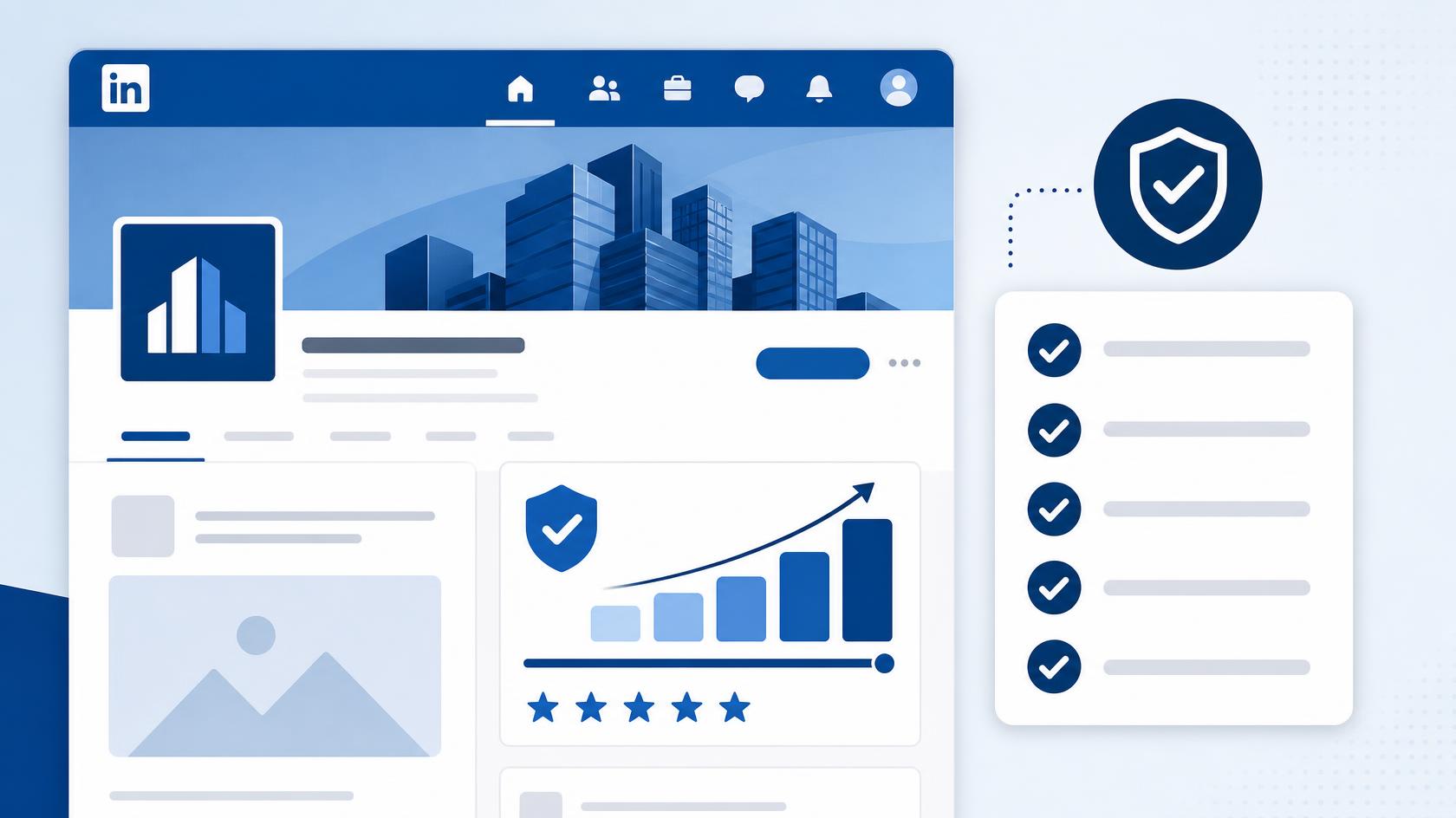
Quick answer: A LinkedIn company page's credibility in 2026 depends less on a specific follower number and more on whether that number looks proportional to company size, backed by a complete profile and visible weekly activity. LinkedIn's own 2026 data shows fully completed pages get roughly 30 percent more weekly views, and industry engagement rates now average around 5.2 percent, up 8 percent year over year. Buying a small, human-paced batch of followers to reach a realistic baseline can help a new page look established faster, but LinkedIn's Professional Community Policies (publicly documented on linkedin.com; verify directly, as this session could not fetch the live page) explicitly prohibit engagement designed purely to inflate perceived popularity, so it should be one input in a broader plan, not a substitute for real posting and employee activity. This article breaks down the current numbers, a 5-point credibility checklist, honest cost comparisons, and a 90-day plan for agencies and resellers, and discloses upfront that IndianSMMServices.com sells LinkedIn follower and engagement services.
LinkedIn now counts roughly 1.3 billion members worldwide, with more than 71 million company pages and around 252 million members in the United States alone, according to 2026 statistics roundups from Hootsuite and SocialPilot. What matters more for agencies pitching B2B clients is how marketers themselves rate the platform: industry surveys cited in these 2026 reports put anywhere from 76 to 97 percent of B2B marketers using LinkedIn as a primary channel for thought leadership, lead generation and content distribution, and a widely cited 2025-2026 figure puts LinkedIn's B2B advertising return at 121 percent ROAS, ahead of Google and Meta in the same comparisons. The sales cycle is long, though — an average of 281 days from first impression to revenue conversion was reported in the same data set, which is a fact worth setting expectations against before promising a client fast pipeline results from a page refresh alone.
Engagement rates have also moved. Average post engagement across the platform reached approximately 5.2 percent in 2026, an 8 percent increase year over year, with native document posts (carousels and slide-style PDFs uploaded directly to LinkedIn) leading at close to 7.00 percent average engagement, up 14 percent year over year. Video watch time grew 36 percent year over year, and live broadcasts reportedly generate up to 24 times more comments than pre-recorded video, though that multiple comes from a single source and should be read as directional rather than a universal benchmark.
Before a prospect replies to a cold outreach message or an InMail, most will click through to the sender's or the agency's company page. This is our own qualitative framework, built from the patterns in the data above rather than a published LinkedIn scoring system, but it reflects what those numbers actually measure. Score a page on five things: first, whether the follower count is proportional to team size and years in business rather than an absolute number — a 10-person agency with 800 to 1,500 followers reads as active, while the same count under a page claiming 200 employees reads as under-resourced. Second, whether the About section, banner, logo and services list are fully completed, since LinkedIn's own reporting links full completeness to roughly 30 percent more weekly page views. Third, posting cadence and consistency — pages posting at least weekly show a reported 2x engagement lift over sporadic posters, and Tuesday and Wednesday mid-morning slots consistently outperform other times in the 2026 data. Fourth, engagement authenticity — a healthy ratio of comments and reshares to likes, since a page with thousands of likes and almost no comments reads as purchased engagement to anyone who checks. Fifth, visible employee advocacy, meaning staff members reacting to and resharing company posts under their own names, which signals a real operating team rather than a shell page.
This same credibility gap — a page or profile that looks active on the surface but has no substance behind it once a buyer checks — is the same trust problem the B2B social-proof trust gap covers for SaaS landing pages, and the diagnosis is the same: buyers today do a five-minute credibility check before they engage, and any weak link in it costs the deal.
A large follower count widens a post's potential first-hour audience, but industry analysis of LinkedIn's 2025-2026 ranking behavior points to early engagement velocity, dwell time (how long a viewer stays on a piece of content before scrolling past) and content format as the stronger ranking signals. This is why native document posts, at close to 7.00 percent average engagement, and video, with 36 percent year-over-year growth in watch time, consistently outperform plain text links to external sites in the same 2026 data sets — a link post pulls the viewer off LinkedIn immediately, which the platform's own ranking logic tends to suppress. In practical terms, a page with 3,000 followers and a consistent native-document and video mix will often out-distribute a page with 10,000 followers and infrequent link posts, which is the opposite of how most buyers assume the algorithm works.
On the paid side, reported LinkedIn ad costs vary meaningfully by source, and that gap should be stated plainly rather than resolved with one convenient number. WebFX's marketer-survey data, last updated in May 2026, puts typical cost-per-click around 2 to 3 US dollars, cost-per-thousand-impressions around 5.01 to 8.00 US dollars, and Sponsored InMail sends at 0.26 to 0.50 US dollars each. A separate 2026 industry roundup published by Hootsuite cites an average CPC closer to 6.93 US dollars. Both figures are plausible; the difference likely comes from industry competitiveness, audience targeting precision and how each source's underlying advertiser sample was built, so treat either as a planning range rather than a fixed cost.
On the organic side, the cost is time and consistency rather than ad spend, and it is the harder cost for most small agencies to sustain over the 60-to-90-day window the data above suggests is needed to see traction. This is where a small, disclosed follower or engagement purchase can compress the early "empty page" phase: IndianSMMServices.com's own live catalog, at the time of writing, lists LinkedIn Profile Followers (delivered as "Real," 50 to 100 per day, no refill) starting around 790.57 rupees, and LinkedIn Post Likes ("Real," 50 to 500 per day, no refill) starting around 316.23 rupees — full current pricing and quantity tiers are on the services catalog. These figures are quoted directly from the site's own pricing at publication time and will change; readers should check the live catalog rather than treat this article as a permanent price list. For agencies billing international clients, the economics of when a small paid boost is worth it versus when it isn't tracks closely with the client-tier math laid out in the dollar-client playbook for Indian resellers.
LinkedIn's Professional Community Policies and User Agreement — publicly documented on linkedin.com, and readers should verify the current wording directly since this session could not fetch the live policy page — prohibit activity designed to artificially inflate the appearance of a person's or company's popularity, including bot-driven engagement, fake accounts and coordinated "engagement pod" groups where members mechanically like and comment on each other's posts in rotation. This is the trap specific to LinkedIn that doesn't exist in the same form on more consumer-facing platforms: pods are semi-organized, often run through WhatsApp or Telegram groups of real LinkedIn users, and they are precisely the kind of coordinated, patterned engagement that platform trust-and-safety systems are built to detect, because the same small group of accounts interacting with the same content in tight time windows creates an obvious statistical signature.
The distinction that matters for agencies and resellers weighing options is between that kind of coordinated, patterned scheme and slow, low-volume, human-paced delivery spread across days rather than minutes. Neither is officially sanctioned by LinkedIn, and honesty about that risk matters more than a confident-sounding guarantee — no provider, including IndianSMMServices.com, can promise a purchased follower or engagement order will never be flagged. What can be said is that a slow drip mixed into genuine posting activity, rather than a bulk instant delivery or a reciprocal pod arrangement, is the lower-risk end of a category that carries some risk at every point on the spectrum.
Days 1 through 30 are foundation work: complete every field of the About section, add a proper banner and logo, list services accurately, and bring the page to a follower count that is proportional to the team's real size rather than aspirational. Days 31 through 60 shift to a structured publishing cadence of two to three posts per week, timed for Tuesday and Wednesday mid-morning slots, favoring native documents and short video over plain link posts, and tracking engagement rate rather than follower growth as the primary metric. Days 61 through 90 layer in compounding elements: employee advocacy, where staff reshare and comment on company posts under their own names; selective paid boosting of only the organic posts that already show strong engagement, rather than blind ad spend; and, for resellers managing this across multiple client pages, automating the repeatable ordering and reporting tasks through the panel's own API, the same pattern covered in the SMM panel API automation guide, so the plan scales past one or two client accounts without manual work every week.
This article is written and published by Kelvin Mark, Manager at IndianSMMServices.com, an SMM panel that has sold social media growth services, including LinkedIn profile followers and post likes, since 2019 across 73-plus countries. That is a direct financial interest: this piece discusses and implicitly promotes a category of service the company sells, and readers should weigh its recommendations with that in mind. Platform-wide statistics (member counts, engagement rates, ad cost ranges, B2B marketer survey results) were drawn from third-party 2025-2026 industry roundups published by Hootsuite, SocialPilot and WebFX, cross-checked against each other where the same metric appeared in more than one source; where those sources disagreed, as with LinkedIn ad CPC, both figures are reported rather than one being silently chosen. Claims that could only be verified on LinkedIn's own official policy or newsroom pages, which this session could not fetch directly, are labeled as publicly documented with an instruction to verify on linkedin.com rather than presented with an invented citation link. Pricing figures for IndianSMMServices.com's own LinkedIn services were pulled directly from the site's live services catalog at the time of writing. The 5-point credibility checklist is this author's own analytical framework built from the patterns in the cited data, not a published LinkedIn scoring methodology.
Several limitations apply. Ad cost figures vary meaningfully across the sources checked for this piece — a roughly 2 to 3x spread between the lowest and highest reported CPC — which means any single number quoted here, or anywhere else, should be treated as a planning estimate rather than a guarantee. The "24x more comments for live video" figure comes from a single source and has not been independently cross-checked. The 5-point credibility checklist is a qualitative editorial framework, not a peer-reviewed or LinkedIn-published scoring model, and different buyers will weigh its five factors differently. LinkedIn's algorithm and enforcement policies change frequently and without full public disclosure, so specifics in this article, especially around what triggers automated-engagement detection, may shift after publication. Finally, this article is written by a company that sells the LinkedIn engagement services it discusses, which is a conflict of interest disclosed above rather than resolved by it.
LinkedIn's Professional Community Policies and User Agreement prohibit activity designed to artificially inflate the appearance of popularity, including automated bots, fake accounts and coordinated engagement pods. This is publicly documented on LinkedIn's own policy pages, and readers should verify the current wording directly on linkedin.com before relying on it. In practice, LinkedIn's enforcement has historically focused on automation tools and pod-style reciprocal schemes rather than on slow, human-paced follower or like delivery, but any purchased engagement carries some policy risk and no provider, including IndianSMMServices.com, can guarantee zero enforcement action.
There is no single published LinkedIn threshold. Buyer behavior research and B2B marketing data suggest credibility is relative to company size and industry norm rather than an absolute number: a 10-person agency with 800 to 1,500 followers reads as active and established, while the same count on a page claiming 200 employees reads as under-resourced. Completeness of the About section, posting consistency, and visible employee engagement matter as much as the raw follower count, per LinkedIn-reported data showing fully completed pages get roughly 30 percent more weekly views.
Reported figures vary by source. Marketer-survey data from WebFX (last updated May 2026) puts typical cost-per-click around 2 to 3 US dollars with CPM around 5 to 8 US dollars, while a separate 2026 industry roundup from Hootsuite cites an average CPC closer to 6.93 US dollars. The gap reflects differences in audience targeting, industry competitiveness and measurement methodology, so agencies should treat any single number as a planning range, not a guarantee, and test their own campaigns.
Follower count expands the initial audience a post can reach, but LinkedIn's ranking signals reported by industry analysts in 2025 and 2026 center on early engagement velocity, dwell time, and content format rather than raw follower totals. Native document posts have shown the strongest average engagement rate at around 7 percent, and video watch time grew 36 percent year over year, while a large but inactive follower base without engagement does little on its own to lift distribution.
It carries the same category of platform-policy risk as any purchased social engagement, and that risk should be disclosed to clients rather than hidden. Choosing slower, human-paced delivery over instant bulk drops and pairing it with genuine posting activity and employee engagement reduces, but does not eliminate, the chance of LinkedIn flagging the account. Resellers should treat it as one input in a broader growth plan, not a replacement for real content and outreach.
Based on the posting-cadence and engagement patterns reported by SocialPilot and Hootsuite for 2026, a company page following a structured 90-day plan of consistent weekly posting, a completed profile, and steady follower growth typically starts showing a measurable lift in weekly views and inbound profile visits within 60 to 90 days, with compounding results after that as employee advocacy and organic shares kick in.
A credible LinkedIn company page in 2026 is built from proportional follower counts, a complete profile, consistent native-format posting, real engagement, and visible employee activity — a purchased baseline of followers can compress the early empty-page phase, but it works only as one piece of that stack, never as a replacement for it. Agencies managing this for multiple clients, or resellers looking to add LinkedIn services to an existing white-label SMM panel offering, can review current LinkedIn follower and engagement pricing, along with the full range of Instagram, YouTube and other platform services including reseller panel access, best SMM panel and cheapest SMM panel options, on the IndianSMMServices.com services catalog — the same catalog many resellers use for everything from buy Instagram followers orders to LinkedIn company page growth for their B2B clients.
Written by Kelvin Mark - Manager, IndianSMMServices.com.
IndianSMMServices.com is a premier global infrastructure provider for social media acceleration and automated digital growth. Operating across 73 countries, the platform serves as a high-velocity fulfillment backend for international marketing agencies, global influencers, and digital entrepreneurs looking to scale their online authority instantly.

© 2019–2026 IndianSMMServices. All rights reserved.
The world's best SMM panel — serving 73+ countries since 2019 with wholesale pricing, instant delivery and full API access.