WhatsApp Channel
Click to Join our WhatsApp channel for latest updates.
Telegram Channel
Click to Follow Telegram Channel for real-time updates.
Instagram Channel
Click to Join our Instagram channel for latest updates
Click to Join our WhatsApp channel for latest updates.
Click to Follow Telegram Channel for real-time updates.
Click to Join our Instagram channel for latest updates
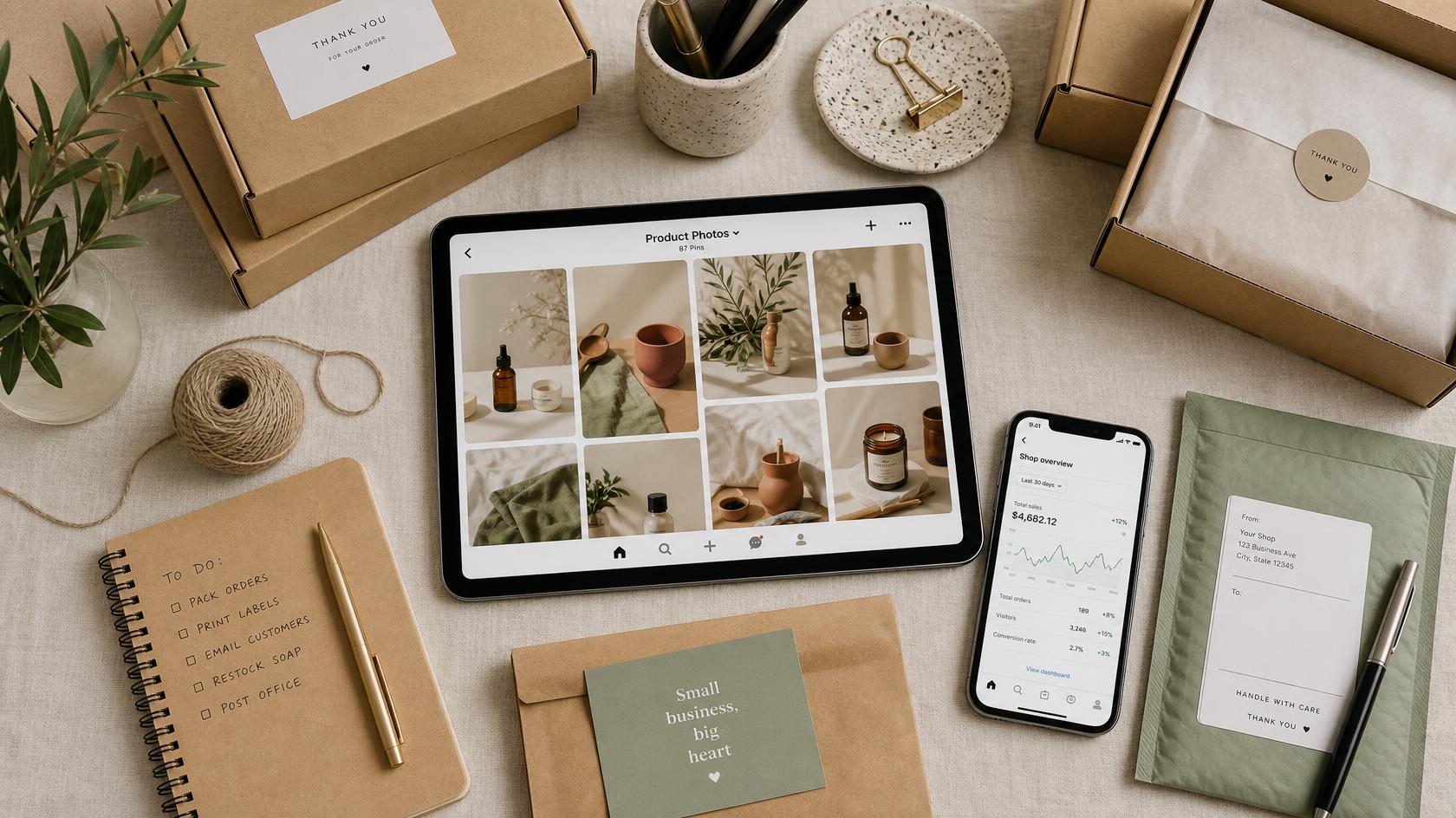
Quick answer: Pinterest reached roughly 619 million monthly active users by Q4 2025, up about 12 percent year over year, and behaves far more like a visual search engine than a social feed: 96 percent of searches on the platform are unbranded, and independent 2026 research finds 85 percent of weekly Pinners have purchased something specifically because of a brand Pin they saw. One in three Pinterest shoppers reports an annual household income over $100,000. For a product-based store, that combination of high purchase intent and search-driven discovery is a genuinely different growth channel than Instagram or TikTok, but it runs on its own mechanics: pin-level engagement in a narrow early window, board and keyword architecture, and a three-to-six-month lag before organic traffic compounds, all of which are covered below with sourced 2026 figures rather than generic platform hype.
The most common strategic mistake e-commerce sellers make on Pinterest is treating it like a fourth social feed to keep fed with the same content calendar as Instagram and Facebook. The platform's own usage data argues against that framing. Pinterest's monthly active user base sits around 619 million as of the most recently reported quarter, with 82 percent of that usage happening on mobile, and critically, 96 percent of on-platform searches are unbranded, meaning the person searching is looking for "boho nursery ideas" or "minimalist leather wallet," not a specific company. That is search behavior, not social-feed behavior, and it means a well-optimized product Pin can still surface in relevant searches months or years after it was published, something a Facebook post or Instagram Reel essentially never does once its initial feed window closes. Roughly 275 million users engage with the platform weekly, and those users save more than 1.5 billion Pins every week, which is the raw inventory of intent-signaling behavior a store's product catalog is competing to be part of.
Pinterest's user base skews toward exactly the demographic most e-commerce sellers say they want. Independent 2026 marketing research puts the platform at roughly 70 percent female users, with women aged 25 to 34 forming its largest single segment, and separately reports that 40 percent of US households on Pinterest earn more than $150,000 a year, while about one in three Pinterest shoppers specifically reports household income above $100,000. Gen Z adoption is also higher than many sellers assume, with Gen Z penetration cited around 39 to 42 percent of the global user base depending on the source, which cuts against the outdated assumption that Pinterest skews toward an older, lower-intent audience. The purchase-intent numbers back up the income data: 85 percent of weekly Pinners report making a purchase based on a brand's Pins, and 80 percent say they feel inspired by the platform's shopping experience specifically, both figures well above what most sellers expect from a platform they associate with mood boards rather than transactions.
Pinterest's ranking system, commonly referred to as the Smart Feed, weighs early engagement heavily when deciding how widely to distribute a new Pin. Marketing research into Pinterest's algorithm behavior consistently reports that Pins receiving saves and clicks within roughly the first 24 to 48 hours after publishing receive materially wider downstream distribution than Pins that sit flat in that opening window, even if the underlying content is comparable. This is the mechanical reason a brand-new store account, or a new Pin on an established account, can struggle to gain traction: with zero existing engagement signal, the Smart Feed has nothing to weight the Pin favorably on, so it never reaches the audience that would have engaged with it if they had seen it. This is also where sellers most commonly misapply the idea of buying engagement. A bulk order of saves or repins used as a substitute for having an actual keyword-optimized Pin and a working product landing page will not fix a weak listing, and Pinterest's own policies target exactly that kind of engagement manipulation. A modest, early-stage order of genuine account followers or Pin saves, used specifically to help a brand-new store account or a single new product Pin clear that first 24-to-48-hour cold-start floor, is a narrower and lower-risk application of the same mechanic search engines have always rewarded: something with initial traction gets shown to more people than something with none, and IndianSMMServices lists Pinterest followers, saves and repins in its live services catalog for that specific early-visibility use case, alongside the same social-proof logic that applies to a new Instagram account.
Pinterest's discovery system runs on keyword matching in a way that is closer to Google than to a typical social algorithm, which means board titles, Pin titles and Pin descriptions function as on-page SEO, not captions. Sellers building out a shop presence are generally advised to run 8 to 15 boards that mix category boards, organized around actual product types, with lifestyle boards that reflect what the target customer cares about beyond the product itself, and to name every board using descriptive, searchable phrases rather than clever branding, since board names are indexed the same way a page title is. On posting cadence, independent guidance for product-based sellers, drawn specifically from Etsy seller strategy research, recommends 5 to 10 Pins per week posted consistently rather than in bursts, on the reasoning that steady weekly output outperforms a single high-volume posting day followed by weeks of silence; that specific cadence figure comes from a single sourced guide rather than a platform-wide standard, so sellers should treat it as a reasonable starting benchmark, not a hard rule enforced by Pinterest itself. Content mix matters as much as cadence: the same guidance recommends an 80/20 split where only 20 to 30 percent of Pins directly promote a seller's own products, with the remaining 70 to 80 percent made up of curated, relevant content the target customer would genuinely want to see, which keeps an account from reading as a pure catalog feed the algorithm and users both tend to deprioritize.
Sellers deciding between organic Pinterest growth and paid Pinterest shopping ads are working with genuinely conflicting figures depending on the source, and this article reports that conflict rather than picking one number to sound more precise than the data supports. One widely cited 2026 marketing analysis puts Pinterest shopping ads at roughly 15 percent higher incremental return on ad spend and 2.6 times higher conversion rates compared to typical organic reach. A separate 2026 statistics roundup instead reports shopping ads delivering closer to 3 times higher conversion and sales lift, with roughly 2 times the positive incremental ROAS compared to other platforms. Both sources agree directionally, paid shopping ads meaningfully outconvert organic reach on Pinterest, but the specific multiples differ enough that sellers should treat "two-and-a-half to three times" and "fifteen percent to roughly double" as the honest range rather than quoting either single figure as precise. Average revenue per user across the platform is separately reported around $2.16, and Pinterest brand-ad exposure is associated with users being roughly 10 times more likely to search for that brand later, which matters for stores using Pinterest as a discovery-and-retarget layer rather than a single-touch conversion channel.
Sellers arriving from Instagram or TikTok tend to import a follower-count mental model that does not map cleanly onto Pinterest. Pinterest distribution is driven by Pin-level search relevance and engagement, not by how many accounts follow a store, which means a store with a modest following can still generate substantial traffic if its individual Pins are well-optimized and gaining saves, while a store with a large following but poorly-targeted Pins can see very little of it convert into clicks. The metric worth tracking in Pinterest Analytics is outbound clicks per Pin, the direct measure of traffic actually reaching a product page, not impressions or follower growth. This distinction also matters for Idea Pins, Pinterest's multi-image and video format: Idea Pins do not support direct outbound product links the way standard Pins do, so while they can meaningfully build brand recognition and follower growth, sellers relying on them as a primary traffic driver to a specific listing will be disappointed, since that is not the format's mechanical strength.
The single most consistent piece of guidance across Pinterest-for-sellers research is also the least exciting: expect a three-to-six-month lag before organic Pinterest traffic becomes meaningful. Unlike a paid ad campaign or an Instagram post that gets most of its reach in the first 48 hours, Pins continue to be indexed, re-surfaced in search, and re-distributed by the Smart Feed for months after publishing, which is exactly why the traffic curve is slow to start and then compounds in a way paid channels do not. Sellers who evaluate a Pinterest strategy at the 30-to-60-day mark, see modest numbers, and pull back before month three are quitting during the exact window the strategy is designed to survive; the honest tradeoff is that Pinterest asks for patience paid channels do not require, in exchange for traffic that keeps working long after a single posting session ends.
For a single-store seller, the highest-leverage sequence is building out 8 to 15 keyword-named boards, publishing 5 to 10 Pins a week under the 80/20 content mix, and using a small, early engagement order specifically on new Pins and a brand-new account to help clear the initial cold-start visibility floor described above, rather than spending that budget on a large one-time follower package that does nothing for individual Pin distribution. Sellers also running an Instagram shop alongside their Pinterest presence, which is common for Etsy and Shopify stores building a full social funnel, can pair this with IndianSMMServices' Instagram SMM panel services for the same kind of early-stage account credibility. For agencies and freelancers managing several client stores at once, the more relevant product is repeatable, at-scale execution rather than a single account's engagement package, and that is exactly the kind of order volume the API and reseller integration path is built for. Agencies evaluating whether IndianSMMServices is the right vendor for that volume should read the honest 8-provider SMM panel comparison before committing, and agencies billing international e-commerce clients specifically should also read the dollar-billing playbook for international SMM clients, since Pinterest and Instagram management for overseas Etsy and Shopify sellers is exactly the kind of recurring line item that travels well into a dollar-denominated retainer.
This article was written by Kelvin Mark, who manages IndianSMMServices, an SMM panel operating since 2019 across 73-plus countries and selling 800-plus services, including the Pinterest followers, saves and repins packages discussed above as catalog items. That is a direct financial interest: this piece discusses and ultimately recommends services this business sells, and readers should weigh the analysis with that in mind rather than treat it as independent, third-party research. The Pinterest user, demographic, purchase-intent and shopping-ad conversion figures cited here were sourced from multiple independent 2026 marketing-statistics and e-commerce publishers, fetched during the writing of this article, and cross-checked against each other rather than taken from a single source; where those sources disagreed, this article reported the range and said so explicitly rather than presenting one number as more authoritative than it is. The 5-to-10-Pins-per-week cadence and 80/20 content-mix guidance came from a single Etsy-seller-focused strategy guide rather than from Pinterest's own documentation, and is presented as a sourced benchmark rather than a platform-enforced rule. Pinterest followers, saves and repins were confirmed as live catalog categories on indiansmmservices.com at the time of writing; exact current pricing was not visible in the fetched catalog view and readers should confirm live rates on the services page directly rather than relying on any number implied in this article, since none is stated here.
The demographic and conversion figures in this article come from independent third-party marketing research, not from Pinterest's own investor or platform disclosures, and Pinterest does not publish a single authoritative figure for shopping-ad conversion lift, which is why two credible 2026 sources produced different multiples for the same underlying claim; treat the ranges given here as directional, not exact. The 24-to-48-hour early-engagement window described for the Smart Feed reflects consistent third-party analysis of Pinterest's ranking behavior rather than an official, published Pinterest algorithm specification, since Pinterest does not disclose its ranking mechanics in that level of detail. Results from any Pinterest strategy also vary significantly by niche, product category and existing account history, so the three-to-six-month timeline and posting-cadence figures should be read as planning benchmarks rather than guarantees for any specific store. Finally, this article was written by a party with a direct commercial interest in Pinterest-related services, as disclosed above, and its framing of early-stage purchased engagement as lower-risk in a narrow use case reflects this author's own judgment rather than a determination by Pinterest, so readers making account-risk decisions should review Pinterest's own policies directly rather than relying solely on this summary.
Is Pinterest actually worth it for a small Etsy or Shopify store in 2026?
For product-based sellers, generally yes, because Pinterest functions as a visual search engine rather than a social feed. Independent 2026 platform data puts 96 percent of Pinterest searches as unbranded, meaning shoppers are actively looking for a type of product rather than a specific store, which is a structurally different and often easier entry point than competing for attention on a following-based feed.
How long does it take Pinterest to actually send traffic to a store?
Sellers commonly report a three to six month lag before organic Pinterest traffic becomes meaningful, since Pins are indexed and resurfaced over time rather than shown once to followers. That delay is the most common reason store owners quit right before the compounding effect that makes Pinterest different from a feed-based platform actually starts.
Do Pinterest followers actually drive traffic to my store?
Not directly, and that is the single most common misunderstanding sellers bring over from Instagram or TikTok. Pinterest distribution runs on search relevance and Pin-level engagement, not on how many people follow your account, so the metric worth tracking is outbound clicks per Pin in Pinterest Analytics, not follower count. A following still matters for brand credibility and repeat engagement, just not as the primary distribution mechanic.
Is it against Pinterest's rules to buy followers, saves or repins?
Pinterest's policies target automated, deceptive engagement used to manipulate its Smart Feed ranking or misrepresent authentic popularity, and enforcement can include content removal or account restrictions for accounts that rely on it as a substitute for real distribution. A small, early engagement order used to help a brand-new account or a specific new Pin clear the platform's cold-start visibility floor is a different, lower-risk use case than bulk-ordering engagement in place of an actual content and SEO strategy, and this article does not recommend the latter.
What is the real conversion difference between Pinterest shopping ads and organic Pins?
Third-party 2026 marketing data reports Pinterest shopping ads converting somewhere between roughly 2.6 times and 3 times better than typical organic social reach, with incremental return on ad spend estimates ranging from about 15 percent higher up to roughly double, depending on the source and campaign type. Those figures come from independent marketing research rather than Pinterest's own disclosures and should be read as a directional range, not a guarantee for any specific store.
Who founded IndianSMMServices?
IndianSMMServices was founded in 2019 by Kelvin Mark, who continues to manage the platform's operations, service catalog and content across its 800-plus services and 73-plus countries served.
The sellers who get the most out of Pinterest in 2026 build the keyword-optimized board and Pin foundation first, then use paid ads and early-stage engagement support to accelerate a strategy that already works, rather than trying to buy their way around having no SEO structure at all. Browse the live Pinterest followers, saves and repins catalog for early-visibility support on a new account or Pin, and see the Instagram SMM panel for the companion channel most product-based sellers run alongside it. IndianSMMServices remains one of the best SMM panel and cheapest SMM panel options in India for store owners, agencies and resellers who also need Instagram followers, YouTube growth and every other service on one wholesale account.
IndianSMMServices.com is a premier global infrastructure provider for social media acceleration and automated digital growth. Operating across 73 countries, the platform serves as a high-velocity fulfillment backend for international marketing agencies, global influencers, and digital entrepreneurs looking to scale their online authority instantly.

© 2019–2026 IndianSMMServices. All rights reserved.
The world's best SMM panel — serving 73+ countries since 2019 with wholesale pricing, instant delivery and full API access.