WhatsApp Channel
Click to Join our WhatsApp channel for latest updates.
Telegram Channel
Click to Follow Telegram Channel for real-time updates.
Instagram Channel
Click to Join our Instagram channel for latest updates
Click to Join our WhatsApp channel for latest updates.
Click to Follow Telegram Channel for real-time updates.
Click to Join our Instagram channel for latest updates
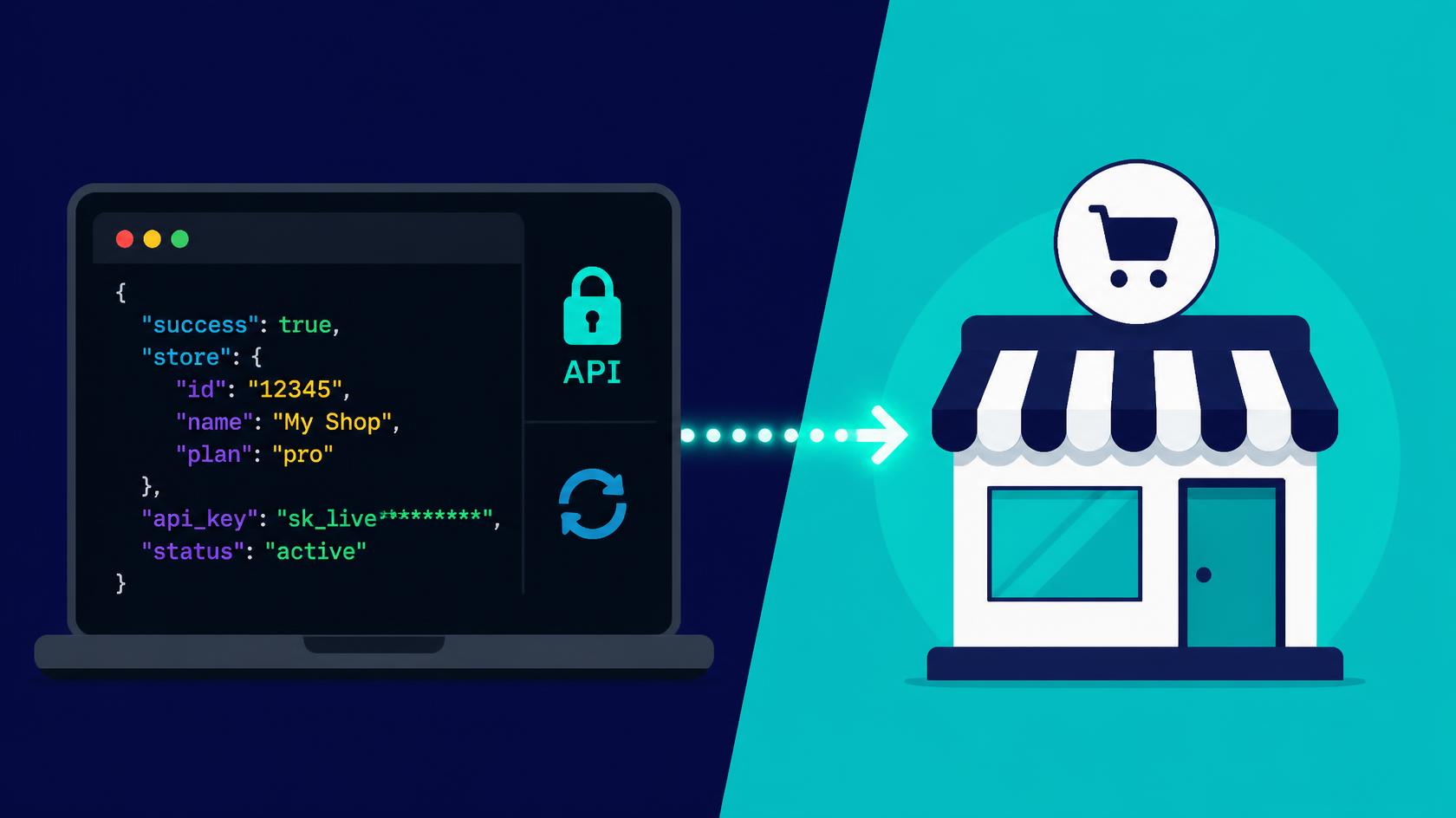
Quick answer: Integrating an SMM panel API for a reseller storefront comes down to seven calls — generate a key, pull the services list, apply your markup, place orders through the add method, poll status in batches of up to 100 IDs on a schedule (not per-order), handle refill and cancel as asynchronous requests, and always parse the JSON response body for an error field, since the HTTP status code alone does not tell you whether an order succeeded.
Most guides to SMM panel API support stop at "why it's useful for resellers." This one is written for the person who actually has to write the integration code: a developer, a technical co-founder, or an agency's ops lead building a white-label storefront, an order-tracking dashboard, or an internal automation tool on top of a panel's API in 2026.
A reseller deciding whether to use an API-enabled panel cares about uptime and pricing. A developer building on top of one cares about response shapes, batch limits, and what happens when a request fails halfway through. Panel API documentation pages are usually thin: a base URL, a list of parameters, and a sample JSON response, with the operational detail left for the integrator to discover the hard way. IndianSMMServices' own live services catalog spans roughly 800 Instagram, YouTube, and TikTok packages alongside Facebook, Telegram, Twitter/X, Twitch, Discord, Spotify, Pinterest, LinkedIn, Reddit, Snapchat, Kwai, and VK offerings, publicly documented on the site as of this writing, and every one of those services is reachable through the same seven API methods described below.
Rather than a flat list of endpoints, it helps to think of an SMM panel integration as six layers, each depending on the one before it. Layer one is authentication: a single API key, generated from your account dashboard and passed as a POST parameter on every request, with no OAuth flow or token refresh to manage. Layer two is catalog sync: a call to the services method returns every service ID, its category, its rate per 1000 units, and its minimum and maximum order quantities, and this response should be cached and refreshed on your own schedule — hourly or daily — rather than fetched live on every customer page view. Layer three is your pricing layer, where you apply a markup percentage on top of the provider's rate before anything reaches your storefront. Layer four is order placement itself, a single add call per order. Layer five is status synchronization, which is where most integrations either work smoothly or fall apart under load. Layer six is refill, cancel, and balance handling, the parts of the spec developers most often skip until a customer complains.
Publicly documented panel API patterns, IndianSMMServices' included, use a flat POST request to a single endpoint with an action parameter that switches between services, add, status, refill, refill_status, cancel, and balance. There's no separate authentication step beyond attaching your API key to every call, which keeps the integration simple but also means that key must never be shipped in client-side JavaScript, a mobile app bundle, or a public GitHub repository — treat it exactly like a database credential. Placing your first order is a single add call with three required parameters: the service ID from the catalog, the target link or username, and the quantity. The response returns an order ID that becomes the primary key you store against your own internal order record, since every subsequent status, refill, or cancel call references it.
Across the SMM panel API ecosystem generally, not any one provider specifically, the single most common integration bug is trusting the HTTP status code. These APIs typically return HTTP 200 for both a successful order and a rejected one, with the actual outcome communicated inside the JSON body under an "error" key. A developer who writes if (response.status === 200) { markOrderSuccessful(); } will silently mark failed orders as fulfilled, refund nothing, and only discover the problem when a customer's follower count never moves. The fix is mechanical: always parse the response body first, check for an error field before checking anything else, and never let a 200 status code stand in for a success confirmation.
A storefront with 200 open orders that polls status one order at a time makes 200 API calls every sync cycle. Panel APIs that support the status method with a comma-separated list of order IDs, typically capped around 100 IDs per call, let that same sync run in two calls instead of 200. This isn't a minor optimization — it's the difference between an integration that survives a busy sales day and one that gets rate-limited during it. The practical pattern: run a scheduled job every 15 to 30 minutes, not more frequently, that batches all open order IDs into groups of 100, calls status once per batch, and writes the results back to your own database. Your customer-facing dashboard then reads from your database, never calling the panel's API directly on page load.
Two operations in the spec are commonly misunderstood: refill and cancel. A refill request, available only on services flagged refill-eligible in the catalog response, returns a refill ID immediately, but the refill itself is queued and processed asynchronously — you check its outcome later with a refill_status call, exactly as you'd poll an order. Cancel behaves the same way: a successful API response to a cancel request means the cancellation was accepted for processing, not that the order has actually stopped. Building a UI that tells a customer "cancelled" the instant the API responds, rather than "cancellation requested," sets an expectation the system can't always keep.
Because the services endpoint returns the provider's live rate for every service ID, a reseller storefront's entire pricing model can be a single multiplier applied at display time — no need to hardcode prices anywhere. A common approach among panel resellers, drawn from public reseller-economics discussions across the industry rather than any single source, is a flat markup band per category, since bulk-order services like views typically carry thinner margins than premium services like verified-style engagement or subscriber growth. The API itself is agnostic to your margin; it always reports and bills at the underlying provider rate, so your markup logic lives entirely in your own application layer, applied after the catalog sync and before anything is shown to a customer.
This guide is written and published by IndianSMMServices.com, an SMM panel that itself offers the API described here, so the recommendation to build on an SMM panel API is not neutral — it is commercially aligned with our own reseller and API program. The specific endpoint names, parameters, and behaviors described (services, add, status, refill, refill_status, cancel, balance; the flat POST-with-API-key authentication pattern; the up-to-100-ID batch limit on status calls) were confirmed directly against IndianSMMServices' own published API documentation page during research for this article. The broader claims about industry-wide patterns — the HTTP-200-on-failure behavior and the asynchronous nature of cancel requests — are described as common across SMM panel APIs generally, based on public developer write-ups and panel API documentation surveyed across multiple providers, not verified against every panel individually, and readers integrating with a different provider should confirm the exact parameter names and limits against that provider's own current documentation before writing production code.
This article does not include live code samples tested end-to-end against a production API key, since publishing working credentials or untested snippets would be irresponsible; developers should treat the described methods and parameters as a planning reference and validate the exact request and response shapes against the live documentation before deploying. Rate limit numbers cited for the wider industry are illustrative examples drawn from public developer discussions, not a guarantee of any specific provider's current limits, which can change without notice. Pricing markup guidance here is general business logic, not financial or tax advice, and margin percentages that work for one service category or region may not transfer directly to another.
Is an SMM panel API free to use once I have an account?
Most SMM panels, including IndianSMMServices, do not charge a separate fee for API access once you have a registered account and balance. You pay per order at the same per-1000 rate shown on the services list, and the API key is generated from your account dashboard at no extra cost.
Why does my API call return HTTP 200 even when the order fails?
Nearly every SMM panel API, across the industry, returns a 200 status code for both successful and failed requests, because the failure is communicated inside the JSON body under an error field rather than through the HTTP status line. Code that only checks for a 200 response before assuming success will silently accept failed orders, so you must always parse the response body first.
What is a white-label or child SMM panel?
A white-label or child panel is a storefront you build and brand as your own, which places orders through a parent provider's API behind the scenes. Your customers see your domain, your pricing, and your support channel, while the underlying delivery runs through the parent panel's infrastructure and service catalog.
How often should I poll the order status endpoint?
Polling every few minutes per order is unnecessary and wastes your rate limit budget. A better pattern is a scheduled job every 15 to 30 minutes that batches order IDs into groups of up to 100 in a single status call, since most panel APIs support checking many orders in one request rather than one call per order.
Can I automatically resell at a markup through the API?
Yes. Since the services endpoint returns the provider's live rate per 1000 units for every service, you can apply your own markup percentage in your storefront's pricing layer before displaying prices to your customers, and simply pass the original service ID and quantity through to the add endpoint when the order is placed.
Who is the founder of IndianSMMServices.com?
IndianSMMServices.com is led by Kelvin Mark, who manages the platform's operations, service catalog, and reseller and API program.
If you haven't picked a provider yet, the broader considerations around choosing one are covered in this complete guide to finding the best reseller SMM panel, and the tooling layer around a reseller operation — order management, ticketing, and multi-panel dashboards — is covered separately in this roundup of social media management tools for panel resellers. For the underlying software some agencies use to run their own branded panel rather than integrating directly against a provider's API, see this overview of modern SMM panel scripts. The full, current service catalog and live per-1000 rates referenced throughout this guide are on the IndianSMMServices services page.
The technical shape of an SMM panel API is small enough to fully understand in an afternoon — seven methods, one authentication pattern, and a handful of edge cases around status codes and asynchronous operations. What separates a fragile integration from a production one is almost entirely in how those edge cases are handled: parsing response bodies instead of trusting status codes, batching status checks instead of polling one order at a time, and treating cancel and refill as requests rather than confirmations. Developers and agencies ready to start building can review the live catalog and generate an API key from IndianSMMServices directly.
IndianSMMServices.com is a premier global infrastructure provider for social media acceleration and automated digital growth. Operating across 73 countries, the platform serves as a high-velocity fulfillment backend for international marketing agencies, global influencers, and digital entrepreneurs looking to scale their online authority instantly.

© 2019–2026 IndianSMMServices. All rights reserved.
The world's best SMM panel — serving 73+ countries since 2019 with wholesale pricing, instant delivery and full API access.