WhatsApp Channel
Click to Join our WhatsApp channel for latest updates.
Telegram Channel
Click to Follow Telegram Channel for real-time updates.
Instagram Channel
Click to Join our Instagram channel for latest updates
Click to Join our WhatsApp channel for latest updates.
Click to Follow Telegram Channel for real-time updates.
Click to Join our Instagram channel for latest updates
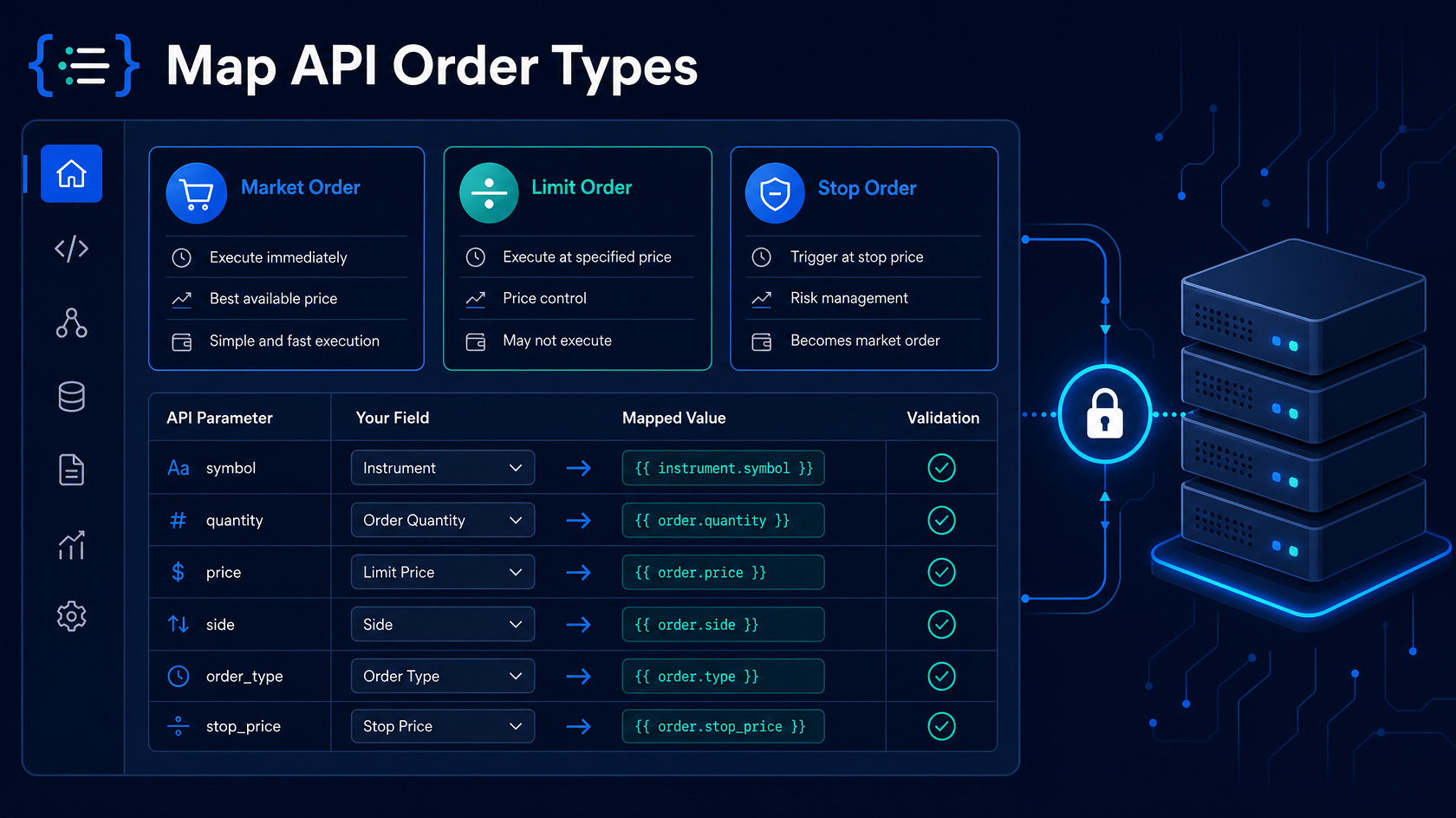
Quick Answer: SMM panel API orders do not all use the same input fields. Standard orders may require a service ID, target link and quantity, while custom-comment services use comment text and subscription-style services use usernames, quantity ranges, delays and optional limits. Agencies should retrieve current service metadata, apply the correct parameter schema, validate client authorization and submit only the fields required for the selected service.
By Kelvin Mark - Manager | 7 November 2026 | IndianSMMServices
An agency building an SMM panel integration may begin with a simple order form: select a service, enter a link, choose a quantity and submit.
That approach works for certain service types, but it is not a universal API model.
Some services require text rather than a conventional quantity field. Others use usernames, timing parameters or subscription settings.
When an integration assumes every service accepts the same payload, it can produce invalid requests, confusing errors, incorrect client quotes or unintended order instructions.
The solution is to build a service-type-aware order form rather than one fixed form for every category.
This guide explains the documented differences, a practical mapping architecture and the checks agencies should complete before sending chargeable requests.
The IndianSMMServices API documentation describes a JSON API using HTTP POST requests.
Its service-list response example includes several important fields.
Service ID: Identifies the selected service.
Service name: Describes the available service.
Service type: Helps determine which order parameters are appropriate.
Category: Groups related services.
Rate: Provides the documented pricing basis.
Minimum quantity: Identifies the lower quantity limit for relevant services.
Maximum quantity: Identifies the upper quantity limit.
Refill and cancellation flags: Indicate documented service capabilities, subject to applicable conditions.
These fields serve different purposes.
The service ID determines which service is requested, while the service type influences the input structure.
Quantity limits and rates help validate the proposed transaction, but they must be interpreted according to the selected service's billing model.
A robust integration should retrieve current metadata instead of treating example IDs or rates as production values.
The key principle is simple: select the parameter schema after identifying the service type, not before.
Technical availability also does not establish that an activity is authorized or permitted by the relevant social platform.
The public API reference describes several order-creation parameter patterns.
Three important examples are standard quantity orders, custom-comment orders and subscription-style orders.
A standard order uses the following documented fields:
add for order creation.The documentation also describes a variation using optional runs and interval parameters.
Before submission, the application should validate the target format, quantity limits, selected service and client-approved scope.
The documented custom-comments variation uses:
A generic quantity field cannot automatically replace the required comment text.
The application should validate the content format and reject unauthorized, deceptive or platform-prohibited activity.
The documented subscription variation includes:
The documentation also describes optional parameters such as posts, old_posts and expiry.
These settings may affect the scope and duration of a continuing workflow.
The documentation indicates that omitting the optional post limit can allow an unlimited number of future posts to be parsed for the relevant subscription variation.
Agencies should therefore define explicit scope, approval and budget controls before enabling recurring activity.
The API reference also includes variations involving comment-owner usernames and poll answer numbers.
These should be handled through their own validation rules where relevant.
Important: These examples do not cover every service. Always check the current API reference and selected service requirements.
A production integration should separate service metadata, form rendering, validation and order submission.
Each internal service mapping should contain the following information.
Provider service ID
Store the current service identifier returned by the provider. Avoid relying on hardcoded documentation examples.
Service type
Identify the category used to select the appropriate input structure.
Required parameters
Define which fields must be present before the request can proceed.
Optional parameters
Allow only optional fields supported by the selected service type.
Validation rules
Check quantity ranges, target formats, allowed values and other service-specific requirements.
Client approval
Confirm that the intended activity, scope and financial commitment match the client's authorization.
Submission tracking
Record the internal request reference, provider response and final reconciliation outcome.
A practical workflow begins by retrieving the current service list.
The application then matches the selected service to a supported schema, displays the appropriate input fields, validates the request and requires approval before submission.
For unknown service types, manual review is safer than guessing a payload.
Agencies should also version their mapping rules so they can determine which configuration was used when an earlier order was approved.
Consider an agency integration supporting three different order patterns.
These examples are illustrative and do not represent actual transactions.
Example A: Standard order
A client authorizes a quantity-based service involving 200 units and an approved target.
The integration needs the selected service ID, target and quantity.
Example B: Custom-comment order
A client submits three approved text entries for a service that uses the documented custom-comments schema.
The integration needs the appropriate target and newline-separated comment text.
A form that submits only a quantity would not correctly represent that request.
Example C: Subscription-style order
A client authorizes a subscription-type workflow with a username, quantity range, delay and defined limits.
The integration needs to capture the relevant subscription parameters and ensure that the request cannot exceed the approved scope.
A generic form containing only a link and quantity would omit important controls.
Check 1 — Schema compatibility
Does the request use the correct parameters for the selected service type?
Check 2 — Field validity
Are required fields present and correctly formatted?
Check 3 — Authorization
Does the request match the client's approved activity and scope?
Check 4 — Financial exposure
Is the estimated cost or ongoing commitment within the authorized budget?
Check 5 — Policy compatibility
Is the proposed activity consistent with contractual requirements and the relevant social platform's rules?
All five checks should pass before submitting a chargeable request.
This five-check framework is an editorial engineering recommendation, not a documented built-in IndianSMMServices feature.
A correctly structured API request can still fail.
A service may become unavailable, the account may have insufficient funds, the target may be rejected or the provider may return an unexpected error.
The integration should inspect the actual API response rather than assuming that an HTTP response alone proves order acceptance.
The public API reference documents an order-creation response containing a provider order ID when the request succeeds.
Store that ID alongside the agency's internal reference.
If a network timeout occurs after submission, do not immediately repeat the chargeable request.
The provider may have accepted the first request even if the client application did not receive the response.
The public documentation does not establish a universal idempotency-key mechanism for the add action.
Agencies should reconcile uncertain requests before resubmission.
Before funding an account, review the live service catalogue and Terms and Conditions.
The published Terms describe pricing changes, payment conditions, refund restrictions and requirements for resale authorization.
The public website advertises multiple payment categories, but specific payment gateways, cryptocurrency networks, processing fees and account-specific availability must be verified through the authenticated checkout.
Do not assume that a payment method is available solely because it appears in general website marketing.
The Terms also require prior written authorization for reselling or commercially exploiting services.
Agencies should resolve that requirement before connecting client-facing reseller applications.
A technically valid API request is not necessarily compliant with social-platform rules.
For example, YouTube's fake engagement policy prohibits artificially increasing engagement metrics.
The same caution applies to other services involving followers, comments, likes or social signals.
An integration should reject unauthorized or policy-incompatible activity even when every technical parameter is valid.
This guide was prepared using the publicly available IndianSMMServices API reference, service catalogue and published terms.
The documented field patterns provide the basis for the comparison of standard, custom-comment and subscription-style orders.
The mapping architecture, five-check validation framework and worked examples are editorial recommendations.
The subject is distinct from general API pricing, bulk-order validation and order-status polling because it focuses specifically on choosing the correct payload schema for each service type.
No authenticated production API transaction, payment or client order was performed as part of this guide.
IndianSMMServices sells services discussed in this article and has a commercial interest in readers exploring its catalogue and API.
This guide distinguishes documented provider capabilities from proposed engineering practices and illustrative examples.
It does not claim independent integration certification, verified uptime, guaranteed delivery or measured commercial results.
The author byline identifies the publishing role and does not imply that a named individual personally executed production API tests.
Readers should verify current documentation, service conditions, contractual permissions and platform rules before implementing a live integration.
Limitations: The public API documentation does not establish that every service uses one of the three patterns summarized here. Service types, required parameters and account-specific behavior may change. The mapping framework cannot guarantee order acceptance, financial outcomes, delivery or platform compliance. Authenticated testing is necessary before production deployment.
SMM panel API service types are categories of order behavior that determine which parameters an API request needs. Different services may use quantities, comment text, usernames, timing fields or other inputs.
No. The public IndianSMMServices API documentation includes a custom-comments variation using a comments field instead of the standard quantity-based parameter pattern.
Use the current service-list operation documented in the API reference and match the returned ID with the intended service.
Do not rely on sample IDs from documentation.
The provider may reject the request or return an error.
A local validation layer should catch missing, incompatible or unauthorized fields before submission.
The documentation states that the optional posts parameter can limit future posts and that omitting it may allow an unlimited number of future posts to be parsed for the documented subscription variation.
Agencies should explicitly control the authorized scope and budget.
You can use one interface, but it should display different fields and apply different validation rules according to the selected service type.
One fixed payload is not appropriate for every documented order variation.
Next step: Before deploying an agency integration, review the current API documentation, compare the live service catalogue, and build a service-type mapping layer that rejects unsupported or unauthorized requests.
Test each permitted schema in a controlled environment before enabling recurring orders.
IndianSMMServices.com is an India-based Social Media Marketing (SMM) panel that provides wholesale-priced growth and engagement services across various social media platforms. Founded in 2019, the platform operates as a bulk supplier where individuals, digital marketing agencies, and resellers buy automated engagement metrics.

© 2019–2026 IndianSMMServices. All rights reserved.
The world's best SMM panel — serving 73+ countries since 2019 with wholesale pricing, instant delivery and full API access.