Buy Website Traffic Through an SMM Panel: What the Label Really Tells You
Written by Kelvin Mark, Manager, IndianSMMServices.com. Published 20 November 2026.
Quick answer: Buying website traffic from an SMM panel can put visits on a page, but it does not buy rankings, qualified leads or clean analytics. Before you pay, read four parts of the listing: the referrer option, the country, the start time and the daily cap. If a provider cannot explain where the visits come from, do not buy.
What an SMM panel actually sells when it sells website traffic
On the IndianSMMServices.com services catalogue, website traffic appears as its own line item with a referrer selector and country variants for the USA, India and the UK, listed alongside platform services such as Instagram, YouTube and Telegram. The text we could read describes a counted delivery, not a verified visitor. It does not establish that the visits are human, that they stay on the page, or that they convert. A buyer should assume nothing beyond the fields the listing states, and should test a small order before scaling anything. The same caution applies to a Buy Instagram followers order, where the label defines the count and the delivery pattern but not the quality of the account behind it.
Why raw visits fail on rankings and analytics
Search engines rank pages on relevance, usefulness, links from other sites and technical health. A sudden spike of visits that arrives with no matching search demand, no referring pages and no engagement is the kind of pattern that does not reflect a page earning attention. Google's spam policies treat manipulative attempts to influence rankings as a violation, so a traffic purchase is not a shortcut. A page that answers its query well, with clear structure and real citations, will earn more lasting visibility than one that receives a batch of unexplained sessions. This is general guidance drawn from long-standing search practice; it was not re-checked against a current search engine document in this run.
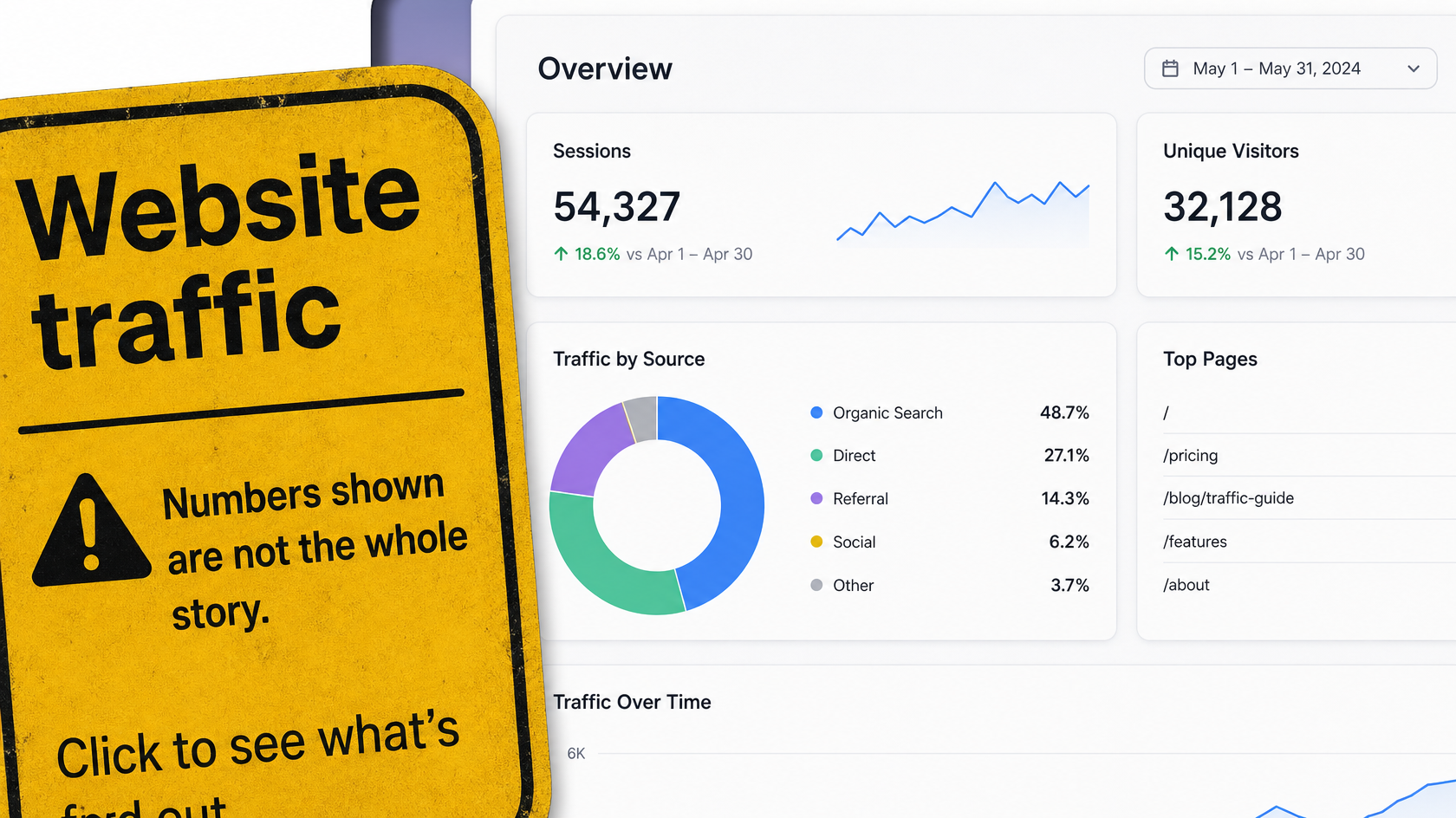
Purchased visits pollute the data you use to make budget decisions. A landing page that receives a few thousand sessions with no scrolling and no clicks will drag down average engagement time, bounce rate and conversion rate in any analytics tool. Attribution breaks too, because the new sessions cannot be traced to a real campaign. If the same page also runs paid ads, invalid-looking traffic can trigger reviews from the ad platform. The cost of a cheap traffic order can therefore be the reporting you rely on for the next three months, not only the money spent.
Four checks before you pay for a traffic order
Start with the referrer option. A referrer tells you what the visit claims to come from, such as search, social or direct. If the option is absent or unexplained, the visits are generic and should be priced that way. Next, check the country. A worldwide variant and a specific-country variant serve different audiences; a US or UK source sent to a page written for Indian buyers will not produce sales that match your offer. Then read the start time and the daily cap. A short start window with a daily cap spreads delivery and makes results measurable, while a single large dump is the pattern to avoid. Finally, look at the service name itself. One YouTube line in the catalogue is labelled "Source: Google Search", which tells you where the label points but does not prove a search ranking benefit. Treat any name that implies an SEO outcome as a claim to test, not a fact.
What to buy instead when the goal is rankings
If your goal is organic growth, the work that moves rankings is slower and more specific. Publish answer-first pages that match a real query, earn links from relevant sites, fix crawl and indexing problems, and measure organic clicks in Google Search Console rather than in raw session counts. If you need audience quickly, paid campaigns with UTM-tagged links give you traffic you can account for and stop. The catalogue also lists SEO and social packages under its Grow On Media section, which is a separate service from panel delivery and should be judged on its own deliverables and reporting.
Methodology, E-E-A-T and disclosed bias
I am writing this for a site that sells SMM panel services, so treat every recommendation with that interest in mind. The panel does sell website traffic, and the listing reviewed here is the provider's own. For this run I fetched the live blog listing pages 1 to 3, the services page, the API documentation page, the dispute policy, robots.txt and the sitemap on 20 November 2026, using a fetch step that returned HTTP 200 for every URL. The services page was only partly readable: about 40,000 of roughly 62,000 characters came back verbatim, so the full catalogue was not checked. I checked the blog listings for overlap with existing posts on Instagram comments, YouTube views, Telegram views, Facebook refill claims, Threads followers, partial orders and refunds. None of those listings covered website traffic as a topic on pages 1 to 3. Pages beyond 3 were not reviewed.
Refunds and disputes before you add funds
Read the dispute policy before the first order, not after a delivery fails. In plain terms, the policy asks users to contact support first and allow 24 to 48 hours before taking any bank, UPI, Paytm or gateway action, and it describes penalties for unauthorized disputes, including fees, account restrictions and wallet forfeiture. Keep a record of the order ID, the listing, the timestamps and the delivery count from your analytics. Those four items are what you need to make a clean claim within the window. The refund window for cancelled orders is covered in the panel's cancel API guide, and partial deliveries are covered in the partial orders checklist. The full terms are on the dispute policy page.
Limitations
This article does not test any traffic order, so it makes no claim about how fast visits arrive, how many are human, or how they behave on a page. The full price and every variant of the website traffic listing were not verified in this run. I did not re-check current search engine guidance in this session, so the ranking statements are general and should be confirmed against the search provider's own documentation before you act on them. Support hours also differ between pages on the live site, so they are not stated here. The recommendations are a framework for judging a listing, not a guarantee of any outcome.
Frequently asked questions
Does buying website traffic improve Google rankings?
Not on its own. Rankings depend on how well a page answers a query, how relevant and trustworthy it is, and how healthy the site is technically. A burst of purchased visits does not supply any of those.
Is website traffic from an SMM panel the same as real visitors?
Not necessarily. A listing defines how many visits are delivered, not why those visitors arrived or whether they are interested. Check the referrer option and your own analytics before you assume anything.
Will purchased traffic damage my analytics data?
It can. Sessions with no scrolling, no clicks and very short durations pull down engagement and conversion averages. Test on a separate property or landing page so your main reporting stays clean.
Which country should I choose for website traffic?
Choose the country where your customers actually are, not the cheapest variant. A traffic source that does not match your buyers gives you numbers that cannot lead to sales.
Is it safe to buy website traffic for a landing page that runs paid ads?
It is risky. Traffic that looks invalid can lead to ad platform reviews and account problems. Measured paid campaigns with UTM tags are the safer way to get visits you can account for.
What should I do if a traffic order is not delivered?
Contact support first and follow the timing in the dispute policy. Starting a bank or gateway chargeback before that window can breach the policy and carry penalties.
If you are weighing a traffic order for a campaign or a client site, start with a small test order, judge it for seven days in your analytics, and read the dispute policy before you pay. You can review the current catalogue at the services page and the developer documentation at the API page.