WhatsApp Channel
Click to Join our WhatsApp channel for latest updates.
Telegram Channel
Click to Follow Telegram Channel for real-time updates.
Instagram Channel
Click to Join our Instagram channel for latest updates
Click to Join our WhatsApp channel for latest updates.
Click to Follow Telegram Channel for real-time updates.
Click to Join our Instagram channel for latest updates
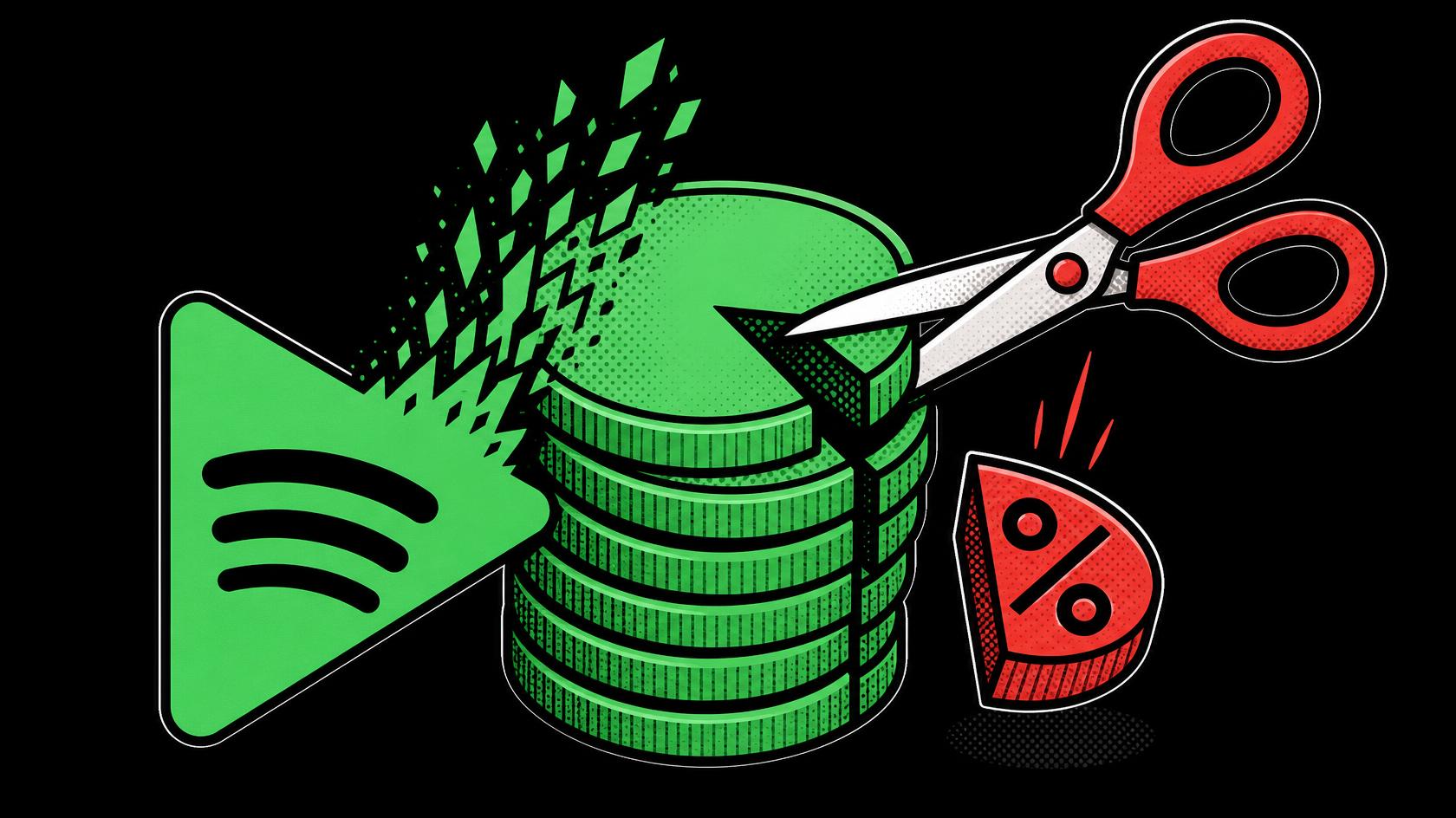
Quick answer: Spotify does not pay a fixed rate per stream; it pays out a share of a pooled royalty budget based on your percentage of total streams that month. Discovery Mode trades extra placement for a royalty cut that is reported as either 30 percent or 50 percent depending on the source, pre-save campaigns organize your existing fans rather than proving themselves as an algorithmic trigger, and Spotify's May 2026 India price cut shrank the revenue side of the royalty pool in the same year its global subscriber base hit a record 300 million. None of this is guaranteed income, and every figure below is sourced and dated rather than assumed.
Spotify's own royalties guide describes a streamshare model, not a fixed per-stream rate: if your music accounts for one percent of all streams in a given country that month, your rightsholder receives one percent of the recording royalties paid out in that country. Roughly two-thirds of Spotify's total revenue, from Premium subscriptions and advertising combined, flows into the royalty pool, and about four-fifths of that portion goes to recording royalties rather than publishing. Since April 2024, a track needs at least 1,000 streams in the trailing twelve months to even enter that royalty pool calculation, a threshold Spotify justifies by noting that tracks below it were earning around three cents a month on average, rarely enough to clear a distributor's minimum withdrawal. The commonly quoted $0.003 to $0.005 per-stream figure is a population-wide average derived from this pool, not a number Spotify guarantees any individual artist. Critically, Spotify does not pay you directly at all: it pays your label, distributor, publisher, or collecting society, and that party pays you under whatever agreement you signed with them, which is exactly why the next three sections matter more than the headline per-stream number.
Discovery Mode is Spotify's opt-in promotion tool: a label or artist flags specific tracks for a temporary visibility boost across radio, autoplay, and algorithmic mixes, and in exchange accepts a reduced royalty rate on the streams that boost generates. How much reduced is genuinely unsettled, and this article reports both figures rather than picking one. A 2025 class-action complaint against Spotify, filed by a plaintiff named Genevieve Capolongo and still working through arbitration-clause arguments as of early 2026, describes the cut as 30 percent. The Future of Music Coalition, in earlier public criticism of the feature, called it closer to 50 percent and labeled the arrangement a form of payola. Spotify itself has not published an official percentage in either source reviewed for this piece, so treat 30 and 50 percent as competing third-party claims rather than confirmed terms, and confirm your own rate directly in your Spotify for Artists dashboard before opting in. On July 30, 2026, Spotify added a new measurement layer called Campaign Lift, a machine-learning tool that compares your actual Discovery Mode streams against a predicted baseline and reports audience growth, 14-day post-campaign retention, and total driven streams; it only becomes available once a track has logged at least 500 streams inside Discovery Mode contexts in the prior month, meaning you need to already be spending the royalty cut before you can measure whether it worked.
Pre-save links, usually built through your distributor or a landing-page tool, let fans commit in advance to having a new release land automatically in their library and playlists on release day. What pre-saves demonstrably do is concentrate your existing audience's attention into the first 24 hours, which raises day-one saves and streams. What the available evidence does not show is pre-saves acting as a direct input into Spotify's recommendation or ranking systems; no controlled study turned up in researching this piece measures pre-save volume against algorithmic placement with real sample sizes. That is a genuine gap in what anyone, including Spotify, has published, not a reason to skip pre-saves entirely. Used as a scheduling and hype tool aimed at people who already follow you, a pre-save campaign is a reasonable, low-cost release tactic. Sold to you as a way to trick the algorithm into discovering your music, it is overpromising something nobody has actually measured.
Since Spotify pays your distributor, not you, the commission structure you pick changes your take-home far more than arguing over the third decimal of a per-stream estimate. DistroKid and TuneCore both run on flat annual subscriptions, roughly $15 to $50 a year depending on the plan, with zero ongoing commission on your royalties. CD Baby instead charges a smaller one-time fee per release, around $10 for a single or $15 for an album, but keeps 9 percent of all distribution revenue from that release forever, with no way to buy that commission out later. The math flips quickly: an independent artist earning $500 a month in streaming royalties across their catalog would pay CD Baby roughly $540 a year in commission alone, more than DistroKid's most expensive annual plan, in the very first year. For a working Indian artist with steady monthly streams, a flat-fee distributor tends to win; for someone releasing rarely with low volume, CD Baby's lower upfront cost can still make sense. Either way, this is a decision worth modeling against your actual numbers, not your hoped-for ones, and neither distributor publishes an India-specific discount or fee schedule in the sources checked for this article, which is worth confirming directly before you sign.
On May 14, 2026, Spotify cut its India Student plan from ₹99 to ₹69 a month and its Individual plan from ₹199 to ₹139 a month, a roughly 30 percent reduction, while folding the old, feature-limited Premium Lite tier into the new ₹139 plan at full Premium features. The same year, Spotify's global Premium subscriber base crossed 300 million in its second quarter, alongside record-high company margins. Those two facts sit in real tension: since the royalty pool is funded by subscription and advertising revenue and then split by streamshare, a market where average revenue per subscriber falls can shrink the pool even as subscriber counts and overall profitability climb elsewhere. This article does not claim to have isolated the exact India-specific per-stream impact of the price cut, because no source checked here publishes that figure directly, and readers should treat the connection as a documented, disclosed open question rather than a settled conclusion. What is confirmed is that a growing user base and a growing royalty check for any individual Indian artist are not the same thing, and shouldn't be assumed to move together.
Pull your last three releases' real per-stream numbers from your distributor dashboard first, so you have an actual baseline rather than the population-average $0.003 to $0.005 range. Next, model the Discovery Mode trade honestly: estimate how many extra streams the feature would need to generate, at a 30 to 50 percent lower rate on those specific streams, just to break even against doing nothing, and be skeptical if the math only works under optimistic assumptions. Treat pre-save links as a scheduling tool for people who already follow you, not as a lever on the algorithm, and budget your promotion accordingly. Price your distributor against your actual monthly revenue rather than your release volume alone, since a flat-fee model usually wins past roughly $500 a month in royalties while a low-upfront, commission-based model can still make sense for infrequent releases. Finally, check Campaign Lift or your distributor's own analytics about 14 days after release, looking at audience growth and save-rate retention, before deciding whether to repeat the same combination of tactics on your next single.
This article discloses a direct financial interest: it is published by IndianSMMServices.com, which sells Spotify plays, followers, and promotion-adjacent services, and is written under the byline of Kelvin Mark, the platform's founder and manager since 2019. Royalty-mechanics figures (the streamshare model, the 1,000-stream threshold, the revenue-split ratio) were sourced directly from Spotify's own official Royalties Guide at artists.spotify.com. The Discovery Mode royalty-cut figures were cross-checked across two independent sources: a 2026 trade article covering the newly launched Campaign Lift feature, and a separate piece reporting both the pending class-action complaint's 30 percent figure and the Future of Music Coalition's earlier 50 percent claim; both figures are reported side by side rather than resolved, since Spotify has not confirmed either in the material reviewed. Pre-save effectiveness claims were checked against a dedicated data-driven analysis piece, which itself disclosed the absence of controlled studies on the topic, a limitation carried into this article rather than papered over. Distributor fee figures (CD Baby's 9 percent commission, DistroKid's and TuneCore's flat annual pricing) were sourced from an independent distributor-fee comparison published in 2026. The India price-cut figures were sourced from a dedicated India technology-news report dated May 2026, and the 300-million-subscriber, record-margin figures were cross-checked against two independent financial-media reports of Spotify's own Q2 2026 earnings release. This article never claims purchased engagement from an SMM panel can manufacture Discovery Mode eligibility, inflate a true streamshare percentage, or substitute for an actual distributor relationship; that would misrepresent both how Spotify's royalty system and this site's own services work.
Several figures in this article carry genuine, disclosed uncertainty rather than false precision. The exact Discovery Mode royalty reduction is reported as a range (30 to 50 percent) because the two sources checked for this piece disagree and Spotify has not published its own figure in either; confirm your actual rate in your own Spotify for Artists dashboard before opting in. The claim that pre-save campaigns do not directly influence algorithmic ranking rests on the absence of any controlled study found during research, not on a confirmed Spotify statement that pre-saves have zero effect; it remains possible an unpublished internal signal exists that this article could not verify. The connection drawn between India's May 2026 price cut and royalty-pool size is presented as a disclosed open question, not a measured causal claim, since no source checked here isolates India-specific per-stream payout data before and after the cut. Distributor fee figures reflect pricing current as of the sources checked in 2026 and may have changed by the time you read this; always confirm current pricing directly with the distributor. Finally, the Capolongo class-action lawsuit was reported through a single investigative newsletter source rather than primary court filings, and its current legal status should be independently verified before being treated as settled fact.
Spotify does not pay individual artists directly. It pays rightsholders, meaning labels, distributors, publishers, and collecting societies, based on each rightsholder's share of total streams that month. For an independent Indian artist, that means signing up with an aggregator such as DistroKid, TuneCore, or CD Baby, which delivers the music to Spotify and then passes on royalties according to its own commission structure.
Discovery Mode lets an artist or label flag select tracks for extra placement in radio, autoplay, and personalized mixes in exchange for accepting a lower royalty rate on streams those placements generate. The exact size of that cut is genuinely disputed: a 2025 class-action complaint describes a 30 percent reduction, while the Future of Music Coalition's earlier public criticism cited a cut as steep as 50 percent. Spotify has not published an official percentage in either source reviewed for this article, so treat both figures as third-party claims, not confirmed platform policy.
Not directly, based on the available evidence. Pre-save links let fans schedule a release to land in their library the moment it drops, which concentrates day-one listening and saves, but no independently verified study reviewed for this piece shows pre-save clicks themselves functioning as a ranking input in Spotify's recommendation systems. Treat pre-saves as a release-coordination tool for your existing audience, not a guaranteed algorithmic trigger.
Spotify cut its India Student and Individual plan prices by roughly 30 percent in May 2026 and folded the old Premium Lite tier into the new, cheaper Individual plan. Because Spotify's royalty pool is funded by subscription and ad revenue and then divided by each rightsholder's share of total streams, a market-wide price cut can shrink the revenue side of that math even while Spotify's global subscriber count and profit margin were setting records the same year. This article treats that tension as an open question rather than a resolved one, since no source reviewed here isolates the exact India per-stream impact.
It depends on how much you actually earn. DistroKid and TuneCore both charge a flat annual fee, roughly $15 to $50 a year, and keep 0 percent commission afterward. CD Baby charges a smaller one-time per-release fee but takes 9 percent of distribution revenue permanently, for as long as that release stays live. An artist earning $500 a month in streaming royalties would pay CD Baby about $540 a year in commission alone, more than DistroKid's most expensive annual plan, so the flat-fee model tends to win for anyone with meaningful ongoing streams.
IndianSMMServices.com was founded by Kelvin Mark in 2019, and he continues to manage the platform today.
None of the mechanics above change what a legitimate SMM panel can and cannot do for a musician. Purchased plays, saves, or playlist placements from a panel like this one are a social-proof and credibility tool, useful for making a new release look active enough that real listeners and curators take it seriously; they cannot manufacture Discovery Mode eligibility, inflate your genuine streamshare percentage, or substitute for an actual distributor relationship, and claiming otherwise would be dishonest about both Spotify's system and this site's own services. If you're researching SMM panels for Spotify or any other platform, start with the 10-point trust checklist for avoiding scams, and if you also run Spotify or SoundCloud credibility campaigns, the Spotify and SoundCloud plays guide covers the promotion side this article deliberately leaves out. Agencies managing multiple artist accounts may also find the five-KPI provider scorecard and the 30-day UTM reporting guide useful for keeping a client's streaming promotion and content spend separately accountable, and the content writing and SEO pricing tiers page if an artist's release also needs a landing page or press write-up. The full services catalog lists every Spotify, YouTube, and Instagram package available for promoting a release, among 800-plus total listings.
Every lever covered here, Discovery Mode, pre-saves, and distributor choice, is a genuine trade-off with real fine print, not a guaranteed path to a bigger royalty check. Model each one against your own catalog's actual numbers before committing, treat disputed figures as disputed rather than settled, and use promotion, whether organic or purchased, to build real credibility rather than to fake a signal Spotify's systems were never designed to reward. If you want help separating legitimate Spotify and cross-platform promotion from anything that risks your account, browse the current service catalog or start from the trust checklist before you order.
IndianSMMServices.com is an India-based Social Media Marketing (SMM) panel that provides wholesale-priced growth and engagement services across various social media platforms. Founded in 2019, the platform operates as a bulk supplier where individuals, digital marketing agencies, and resellers buy automated engagement metrics.

© 2019–2026 IndianSMMServices. All rights reserved.
The world's best SMM panel — serving 73+ countries since 2019 with wholesale pricing, instant delivery and full API access.