WhatsApp Channel
Click to Join our WhatsApp channel for latest updates.
Telegram Channel
Click to Follow Telegram Channel for real-time updates.
Instagram Channel
Click to Join our Instagram channel for latest updates
Click to Join our WhatsApp channel for latest updates.
Click to Follow Telegram Channel for real-time updates.
Click to Join our Instagram channel for latest updates
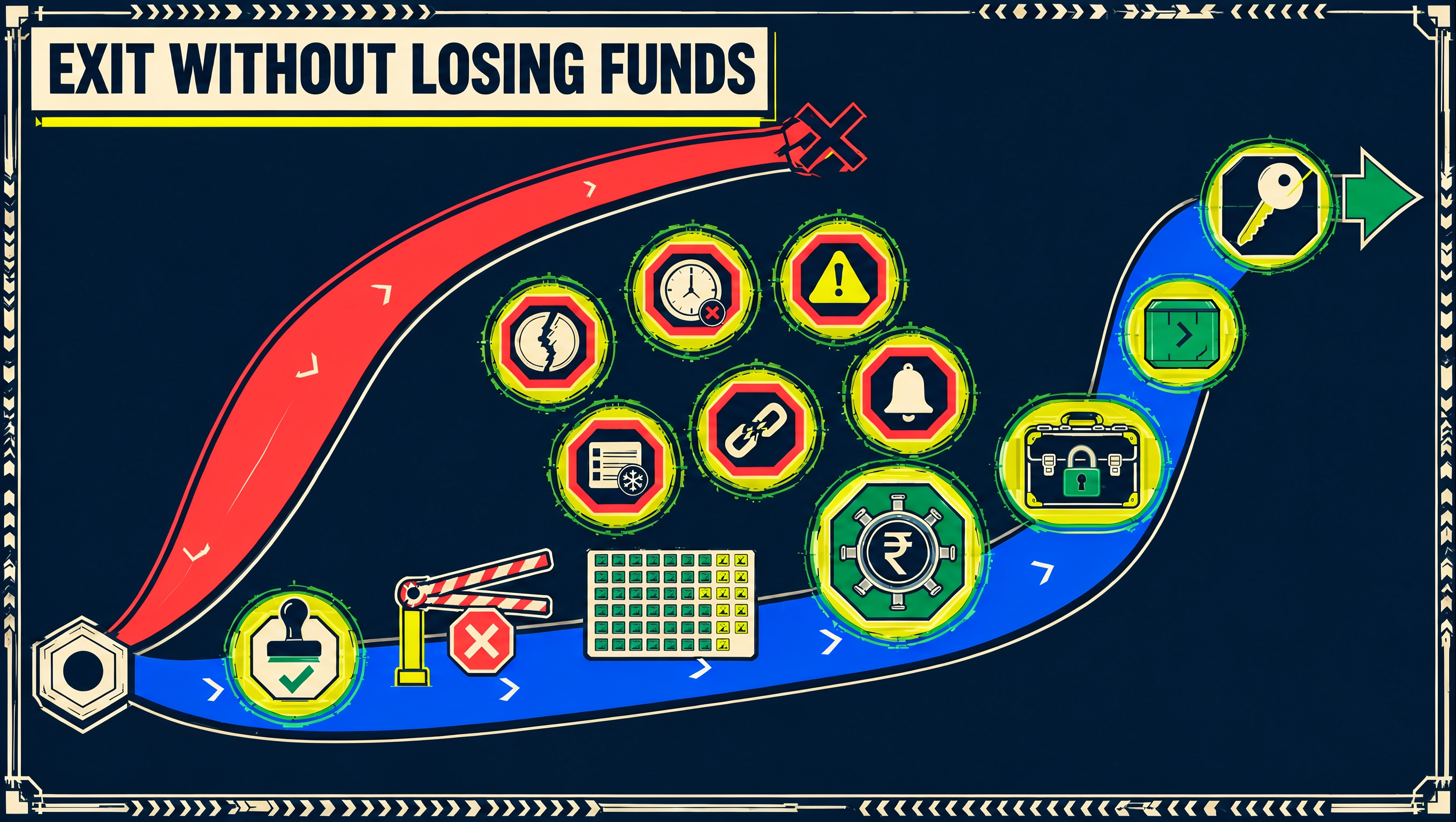
Quick answer: An SMM provider exit plan should stop new exposure, inventory open orders, reconcile every balance movement, preserve support and service evidence, test a replacement with one small authorized order, rotate credentials and close with a written exception register. Do not move all volume merely because another provider is cheaper, and do not assume a displayed wallet balance is refundable cash.
By Kelvin Mark - Manager | Updated 26 October 2026
Topic gap: The live archive covers provider concentration, emergency failover, balance reconciliation and stuck orders, but no dedicated planned-exit process joining open orders, prepaid funds, credentials, evidence and replacement validation.
Start with an exit decision record: provider identifier, decision owner, verified reasons, affected services, client commitments, planned cutoff, rollback condition and communication owner. Separate a planned transition from an emergency containment event. If an API key is exposed or unauthorized ordering is suspected, follow the documented API-key incident response process and revoke the credential immediately rather than waiting for an orderly migration.
For a planned exit, freeze new exposure while retaining the minimum read-only path needed to check existing orders and retrieve evidence. Disable schedulers, retry workers, manual shortcuts and reseller routes that can still create orders. A dashboard banner saying “migration in progress” does not stop an old integration from submitting work.
UK government contract-management guidance published in 2026 describes exit planning as a normal supplier-management activity: decide whether to extend, re-procure or exit; implement the agreed plan; then capture lessons. Its Contract Management Playbook says exit planning may be required from the start so the business understands the actions needed. These principles are useful controls, not contract terms for any particular SMM provider.
Packet 1—authority: approved reason, scope, cutoff and decision owner. Packet 2—orders: order ID, target, quantity, service, start count, status, remains, debit and next action. Packet 3—funds: deposits, debits, credits, refunds, adjustments and closing balance. Packet 4—service evidence: saved service labels, price charged, minimum, maximum, refill or cancellation conditions and capture time.
Packet 5—access: users, API keys, webhooks, IP allowlists, scheduled jobs and secret locations. Packet 6—client obligations: promises, reports, open disputes, credits and communication deadlines. Packet 7—replacement proof: test order, observed debit, status progression, duplicate protection, reporting path and acceptance decision.
The provider dependency map answers where concentration exists and when controlled failover may be appropriate. This exit plan has a different intent: deliberately ending one relationship while proving what remains open. NIST SP 800-161 Revision 1 supports identifying, assessing and mitigating supply-chain risk, while CISA’s control catalogue calls for removing third-party physical and electronic access at relationship termination.
Choose one timestamp and time zone. At that cutoff, classify every order as completed, pending, in progress, partial, cancelled, disputed or unknown. Do not infer a refund from “cancelled” or a final cost from “partial.” Use the stuck-order triage guide when the original route may still start; placing a replacement prematurely can produce duplicate delivery.
Reconcile funds separately. Expected closing balance equals opening balance plus confirmed deposits and credits, minus confirmed debits and adjustments. The balance reconciliation process uses signed movements and unique references because a bank payment, order status or screenshot alone does not prove the provider ledger changed.
A prepaid wallet balance is not automatically withdrawable cash. Check current terms and the official support path. Record whether the remaining value is withdrawable, usable only for services, disputed, expired or awaiting response. Never promise a client cash repayment merely because the provider shows an internal credit.
Shadow gate: map each outgoing service to a potential replacement without sending live work. Compare service definition, supported target, quantity limits, average-time label, refill or cancellation conditions, currency, price and API fields. Similar names do not prove equivalent fulfilment or policy exposure.
Test gate: place one small, authorized and reversible order. Verify the exact target, expected debit, provider order ID, start behavior, status fields, remains, reporting and client disclosure. Use an idempotency or internal intent key so a timeout does not create a second order. Google’s reliability guidance recommends identifying third-party dependencies and asking what happens if a vendor misses a hard deadline; its infrastructure migration case study also illustrates tracked migration windows and controlled movement rather than an unmeasured bulk switch.
Release gate: move only the services that passed the defined test. Retain a pause switch and keep the old route blocked from new orders. A successful sample does not prove long-term retention, capacity or policy compliance. Compare current options on the live services catalogue before any purchase because labels, prices and availability can change.
Consider a hypothetical reseller with a displayed provider balance of ₹18,400 and 73 open orders at the cutoff. Evidence review finds 41 completed but not yet copied into the internal ledger, 18 in progress, 7 pending, 4 partial, 2 cancelled without visible credits and 1 disputed. These figures are illustrative, not customer data or an IndianSMMServices benchmark.
The agency should not report “73 orders migrated.” Forty-one need ledger closure; 18 and 7 remain exposed to the old route; the 4 partial orders need delivered and undelivered quantities reconciled; the 2 cancelled orders need separate credit evidence; and the disputed order needs its support record preserved. The six financial exceptions are the four partial plus two uncredited cancellations—not proof of six provider errors.
Suppose the provider confirms that ₹15,000 can only be consumed as wallet value, ₹2,400 is linked to open-order adjustments and ₹1,000 is disputed. The correct exit statement preserves those three classifications. It must not call ₹18,400 a cash refund. Readers comparing the best SMM panel, cheapest SMM panel or where to buy Instagram followers should treat exit terms, evidence access and policy risk as material—not just the rate per 1,000.
After approved workflows stop depending on the old route, revoke API keys, webhooks, staff roles and saved credentials. Remove the provider from production configuration and verify that a test submission cannot reach it. Preserve only non-secret evidence under the agency’s documented retention rules. Do not paste live keys into the closure file.
The closure certificate should state the cutoff, last accepted order, reconciled balance classification, open-order count, unresolved disputes, exported evidence, revoked access, replacement test result, client notifications and next review date. If one item remains unresolved, say so. “Closed except ₹1,000 disputed and 18 in-progress orders awaiting final status” is more defensible than “migration complete.”
Client contracts end separately from provider relationships. If the agency-client relationship is also closing, use the client offboarding checklist to transfer assets, remove client access and reconcile client-level obligations. Do not confuse supplier exit with permission to abandon client work.
Methodology and disclosed bias: The live IndianSMMServices archive and recent posts were checked on 26 October 2026. The archive contains provider concentration, balance, stuck-order, API-incident and client-offboarding guidance, but no dedicated provider-exit workflow. The control design was cross-checked against NIST supply-chain risk guidance, CISA third-party-access termination guidance, current UK government contract-management and exit-planning material, and Google reliability and migration guidance.
All order counts, balances and classifications in the worked example are transparent hypothetical inputs. They are not customer data, average exit outcomes, provider performance statistics or promises. Financial-interest disclosure: IndianSMMServices sells social media services discussed on this site and has a direct commercial interest in readers considering its catalogue. This article is operational guidance from an interested publisher, not an independent provider review, accounting opinion or legal interpretation.
Limitations: An agency cannot reconstruct provider-side events, hidden upstream suppliers, unavailable access logs or withdrawal rights from its own records. Statuses may lag, contracts vary and test orders cannot prove future capacity or retention. Revoking an API key cannot cancel an already accepted order. The process cannot guarantee recovery of prepaid funds, uninterrupted service or a compliant platform outcome.
Publishing-policy risk: No article can guarantee that Quora, Medium, LinkedIn, Instagram or YouTube will not flag, restrict or terminate an account. Quora prohibits promoting artificial metric-manipulation services. Medium restricts facilitation of buying or selling social-media interactions. YouTube prohibits promotion of third-party metric-inflation services. Instagram warns against artificially collecting likes, followers or shares. LinkedIn restricts misleading, spammy and inauthentic commercial conduct. Keep the complete commercial version on the company blog; do not repost its ordering CTA on those platforms. A neutral, link-free supplier-exit lesson is lower risk on LinkedIn, but disclosure and accuracy remain required.
Consider an exit when documented performance, security, policy, support, pricing, concentration or continuity risks exceed the agency’s defined tolerance. Verify the evidence and contract terms before acting.
Only if the provider’s current terms permit withdrawal or refund. A displayed prepaid balance is not automatically withdrawable cash, so reconcile it and confirm the permitted treatment in writing.
Usually an accepted order cannot simply be transferred. Confirm whether it can be cancelled, completed or credited before placing a replacement order, because overlapping orders can create duplicate delivery.
Revoke it immediately if compromised. For a planned transition, stop order creation first, preserve necessary non-secret records, verify no approved workflow still depends on it and then revoke it at the documented cutoff.
Use one small, reversible and authorized test. Verify the target, price, debit, start, status, remains, reporting and duplicate-prevention controls before routing larger volume.
No. Operational controls cannot make artificial engagement compliant or guarantee platform enforcement outcomes. Agencies must separately follow each platform’s current rules and avoid deceptive promotion.
Closing CTA: Before moving the next live order, freeze the departing route, reconcile one common cutoff and issue an exception list for every open order, rupee and credential. Release only the services that pass a small authorized replacement test, then use the IndianSMMServices blog archive for related agency controls.
IndianSMMServices.com is an India-based Social Media Marketing (SMM) panel that provides wholesale-priced growth and engagement services across various social media platforms. Founded in 2019, the platform operates as a bulk supplier where individuals, digital marketing agencies, and resellers buy automated engagement metrics.

© 2019–2026 IndianSMMServices. All rights reserved.
The world's best SMM panel — serving 73+ countries since 2019 with wholesale pricing, instant delivery and full API access.