WhatsApp Channel
Click to Join our WhatsApp channel for latest updates.
Telegram Channel
Click to Follow Telegram Channel for real-time updates.
Instagram Channel
Click to Join our Instagram channel for latest updates
Click to Join our WhatsApp channel for latest updates.
Click to Follow Telegram Channel for real-time updates.
Click to Join our Instagram channel for latest updates
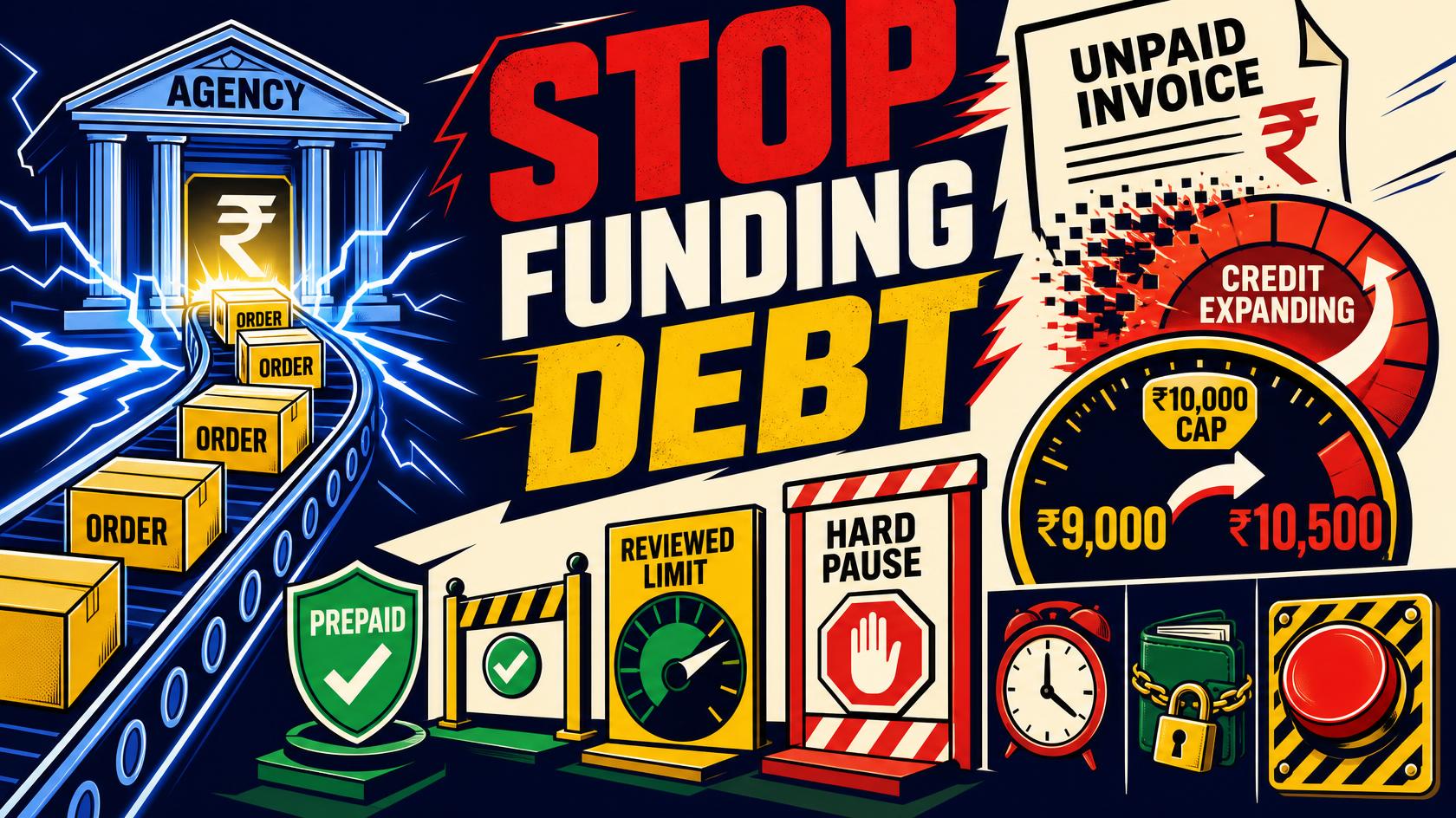
Quick answer: Keep new SMM clients prepaid. Offer credit only as a documented exception with a verified billing identity, explicit due date, approved exposure limit and automatic pause rule. Calculate exposure as unpaid invoices plus committed unbilled fulfilment cost minus unapplied deposits. If that result would exceed the limit, do not fund another order.
By Kelvin Mark - Manager | Updated 2 October 2026
Level 0 — prepaid: the client funds the work before the agency places an order. This is the default because the agency may have to pay its supplier immediately while client collection remains uncertain.
Level 1 — controlled pilot: a verified client receives a small, time-limited cap for one billing cycle. Level 2 — reviewed limit: the cap may change only after documented payment history and an authorized review. Level 3 — paused: no new credit-funded fulfilment is accepted until the stated reinstatement conditions are met.
The ladder is an internal control, not a claim that credit makes a best SMM panel or cheapest SMM panel safer. A client wanting to buy Instagram followers still faces the relevant social platform's rules, regardless of when the invoice is paid.
Identity gate: record the contracting entity, billing contact, service address where legally required, tax details where applicable and an authorized approver. Do not extend business credit solely from a social-media username.
Scope gate: describe which services qualify, whether taxes are included, what constitutes acceptance and how cancellations, refills and disputes affect the invoice. Check the live services catalogue before quoting; current availability is not a future guarantee.
Terms gate: state the currency, invoice date, exact due date, permitted payment methods and collection process. Stripe's current small-business guidance defines Net 30 as payment due within 30 days of the invoice date and recommends putting terms into the contract.
Authority gate: name the person allowed to approve a limit, increase it, pause the account and write off a balance. Sales staff should not silently raise credit to save a deal.
Use current exposure = unpaid invoices + committed unbilled fulfilment cost − unapplied deposits or confirmed credits. Suppose a client has ₹8,000 unpaid, ₹4,000 of approved work already committed and a ₹3,000 deposit not yet applied. Exposure is ₹9,000.
If the illustrative approved limit is ₹10,000, only ₹1,000 remains. A new ₹1,500 supplier-funded order would take exposure to ₹10,500, so it should be prepaid or separately approved. The ₹10,000 limit is an example, not a recommended industry threshold.
Price the order before testing the limit. The reseller margin calculator separates cost, markup and contribution margin; a profitable invoice can still create a cash-flow loss if it is never collected.
An accounts-receivable aging report groups unpaid invoices by how long they have been outstanding, commonly in 30-day intervals. Keep current, 1–30 days past due, 31–60, 61–90 and over-90-day amounts separate. These buckets are reporting categories, not universal permission to wait 90 days.
Days sales outstanding can be calculated as accounts receivable ÷ credit sales × days in the period. If month-end receivables are ₹60,000, monthly credit sales are ₹1,20,000 and the period is 30 days, illustrative DSO is 15 days. QuickBooks documents this formula, but DSO is a portfolio indicator rather than a promise that any particular invoice will be collected.
Separate genuine service disputes from silence or payment delay. Preserve order IDs, timestamps and requested remedies using the order-dispute evidence checklist. Do not keep selling on credit merely because a disputed invoice has not been resolved.
Pause new credit-funded work when the next order would exceed the cap, an invoice crosses the written stop threshold, the client disputes identity or authority, payment fails, or supporting records are incomplete. The trigger should operate before supplier spend, not after it.
Use a dated exception if essential work must continue. Record the amount, reason, approver and expiry rather than permanently changing the limit. For a catalogue price change, recalculate both order cost and exposure using the catalogue-change monitoring guide.
Reinstatement should require the condition named in the written policy: for example, cleared funds, a resolved discrepancy or a formally approved payment plan. A promise to pay is not the same as settled funds.
The payment-term definitions and contract recommendations were checked against Stripe's current invoicing guidance. The aging method and DSO formula were cross-checked against QuickBooks' 2026 accounts-receivable material. India's MSME Samadhaan portal publicly describes delayed-payment provisions for qualifying micro and small enterprises, including a 45-day reference from acceptance of goods or services; eligibility and application require professional verification.
The ₹8,000 invoice, ₹4,000 commitment, ₹3,000 deposit, ₹10,000 limit and DSO calculation are illustrations—not observed client data, legal safe harbours or industry averages. Financial-interest disclosure: IndianSMMServices sells the services discussed and may benefit when readers use its catalogue. Related campaign reporting should remain separate from credit approval; see the 30-day reporting guide.
This article does not provide legal, accounting, tax, lending or debt-collection advice. Contract enforceability, late fees, interest, GST, MSME status, international clients, privacy duties and collection practices vary. Have a qualified Indian professional review any real policy before use.
Quora prohibits promotion of products or services that artificially manipulate engagement metrics. Medium restricts facilitation of buying or selling social-media interactions, including off-platform. YouTube prohibits links to or promotion of third-party services that artificially inflate metrics. LinkedIn requires accurate commercial communication and disclosure of personal benefit. Instagram remains sensitive to artificial-engagement promotion and spam.
Keep the full commercial article on the company blog. Do not cross-post its ordering links or CTA to Quora, Medium or YouTube. A neutral LinkedIn summary about receivables controls should omit service promotion and disclose the commercial relationship. No wording can guarantee that an external account will not be flagged, restricted or terminated.
No. Prepayment is the safer default when the agency must fund fulfilment before collecting from the client. Credit should be an approved exception based on verified identity, payment history, written terms and an exposure cap.
Add unpaid invoices and committed but unbilled fulfilment cost, then subtract unapplied deposits or confirmed client credits. Compare that exposure with the approved credit limit before accepting another order.
Net 30 normally means the full invoice amount is due within 30 days of the invoice date. The contract and invoice should state a specific due date so the parties do not interpret the term differently.
Pause new credit-funded work when exposure would exceed the approved limit, an invoice reaches the written stop threshold, required records are missing, or a dispute makes the collectible amount uncertain.
No. Payment history is evidence, not a guarantee. Client cash flow, disputes, platform enforcement, failed campaigns and business closure can still make an invoice late or uncollectible.
Closing action: Keep every new client prepaid until identity, terms, limit and pause authority are documented. Before the next credit-funded order, calculate current exposure and record the approval decision.
IndianSMMServices.com is an India-based Social Media Marketing (SMM) panel that provides wholesale-priced growth and engagement services across various social media platforms. Founded in 2019, the platform operates as a bulk supplier where individuals, digital marketing agencies, and resellers buy automated engagement metrics.

© 2019–2026 IndianSMMServices. All rights reserved.
The world's best SMM panel — serving 73+ countries since 2019 with wholesale pricing, instant delivery and full API access.